One man's struggle to take it easy
Building a Mini-Cabin: Part 3 - Foundation/Floor
Sunday, Jan 03, 2010
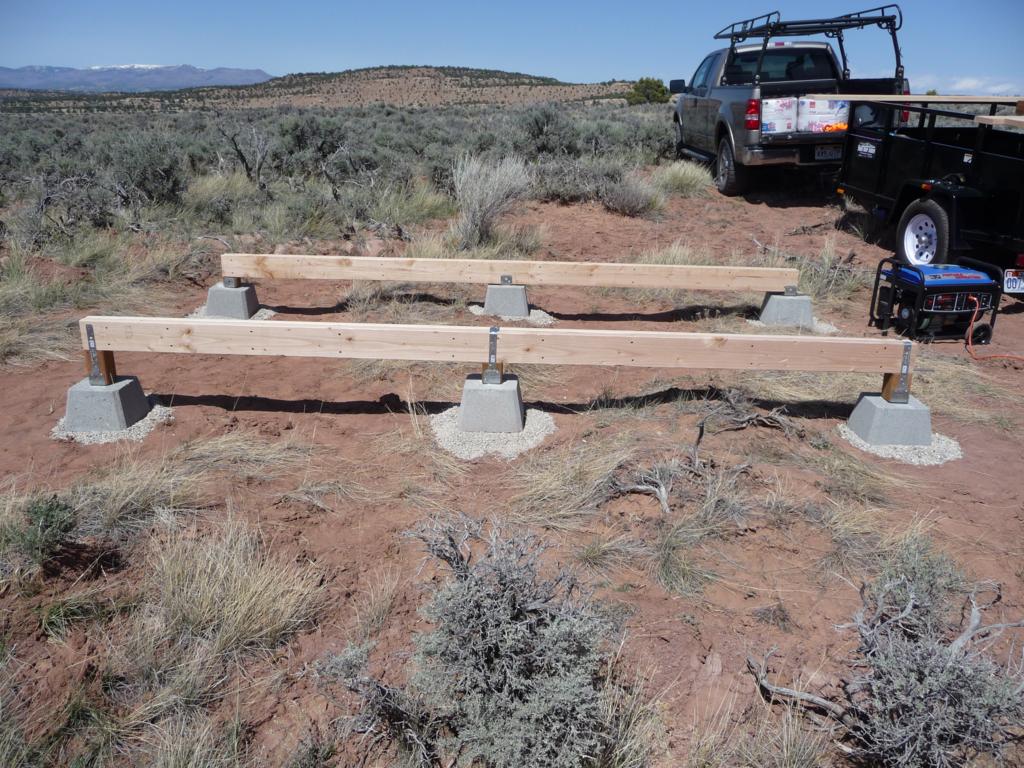
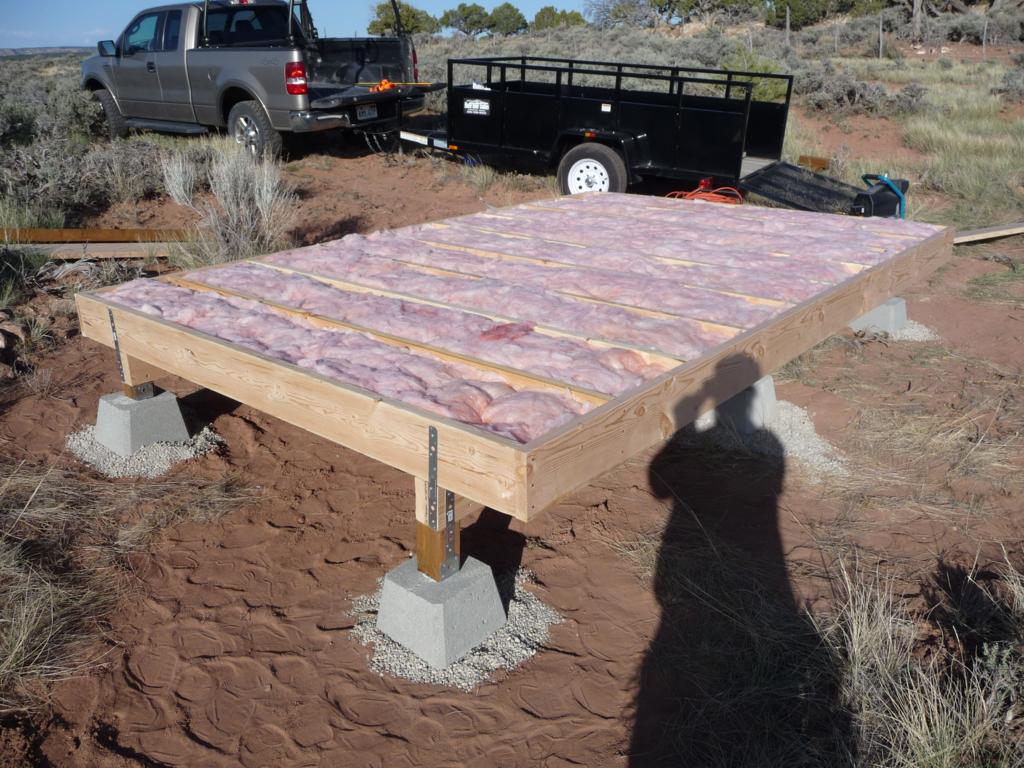
For the foundation of the mini-cabin, I used deck piers sitting on gravel filled holes. The holes are only about six inches deep. Six inches is well above the frost line so this was a big shortcut but if the structure starts to move due to frost heave I figured I could just jack it up and make it level again.
I built two 12’ beams, each beam consisting of two 2x6’s with a strip of 1/2” plywood sandwiched between the 2x6’s, screwed and glued together. The resulting beams are 3-1/2” wide allowing them to fit the brackets of the deck piers.
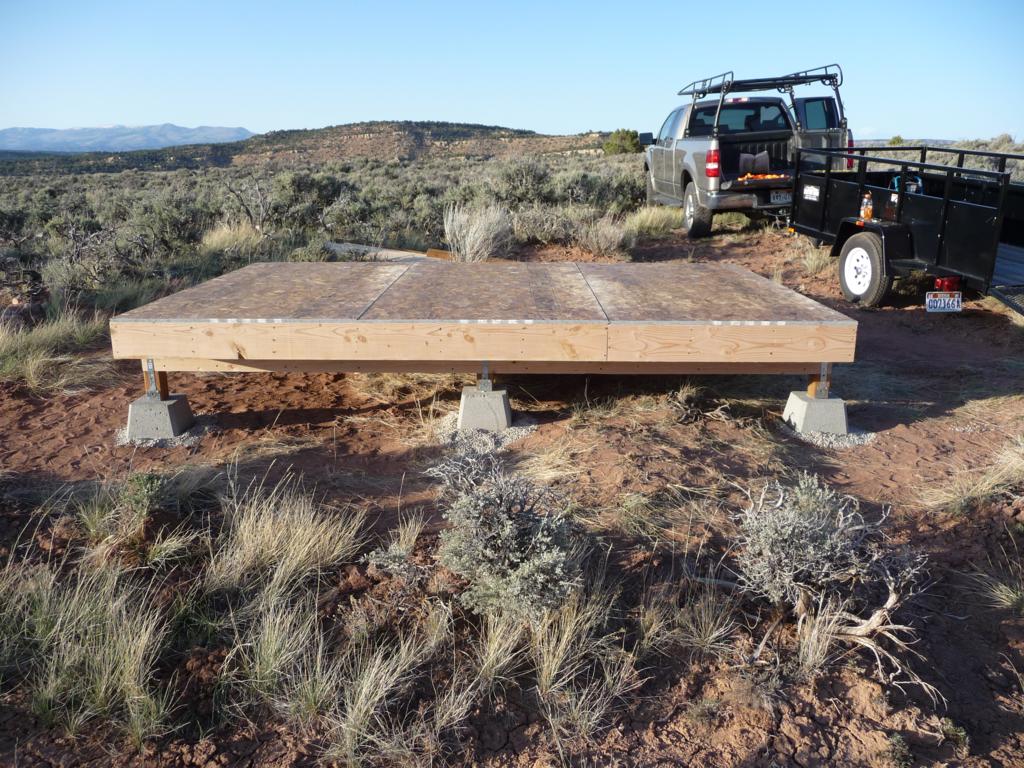
I used three deck piers per beam and the beams are placed six feet apart. To level the beams, I used treated 4x4 posts where necessary.
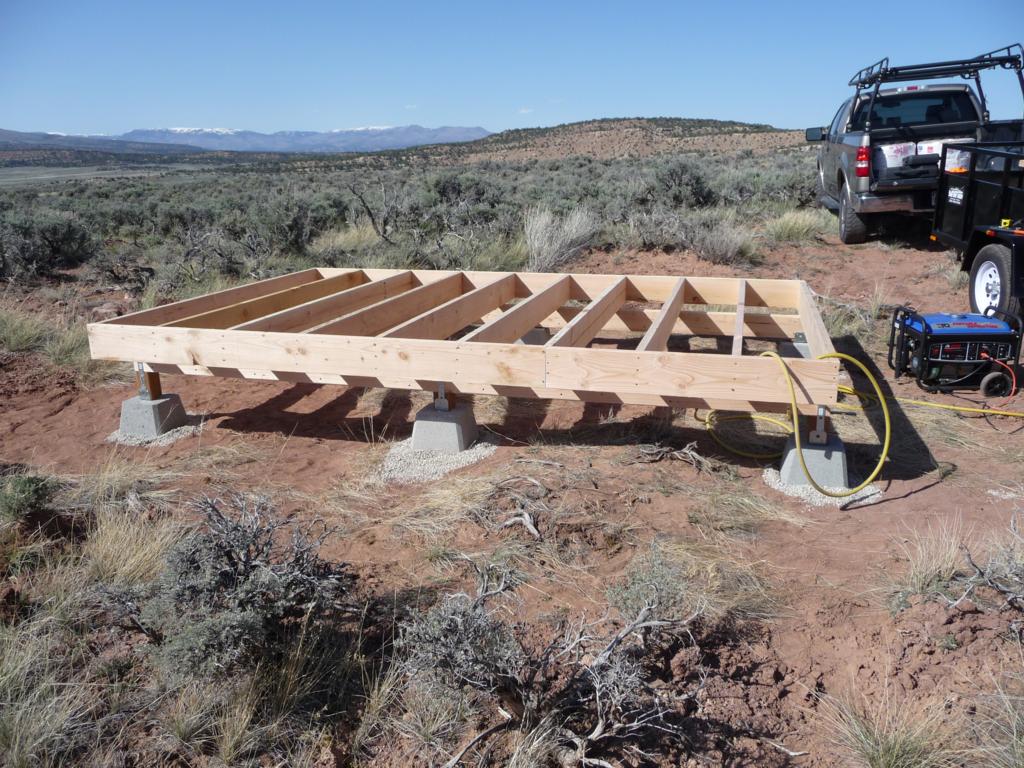
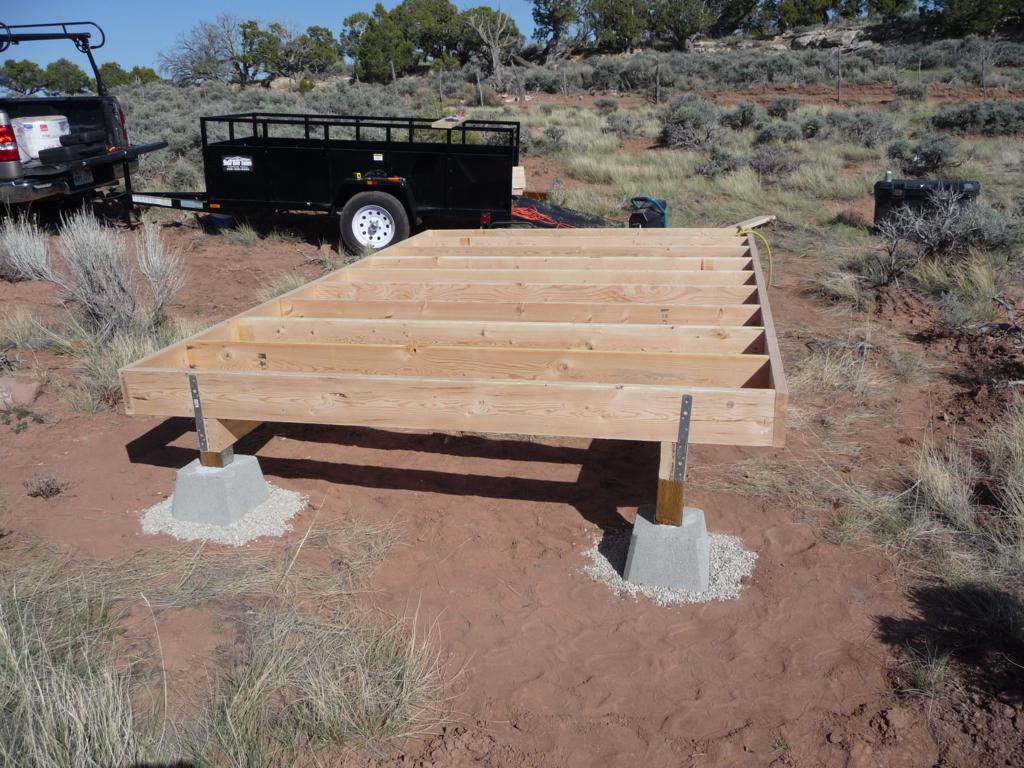
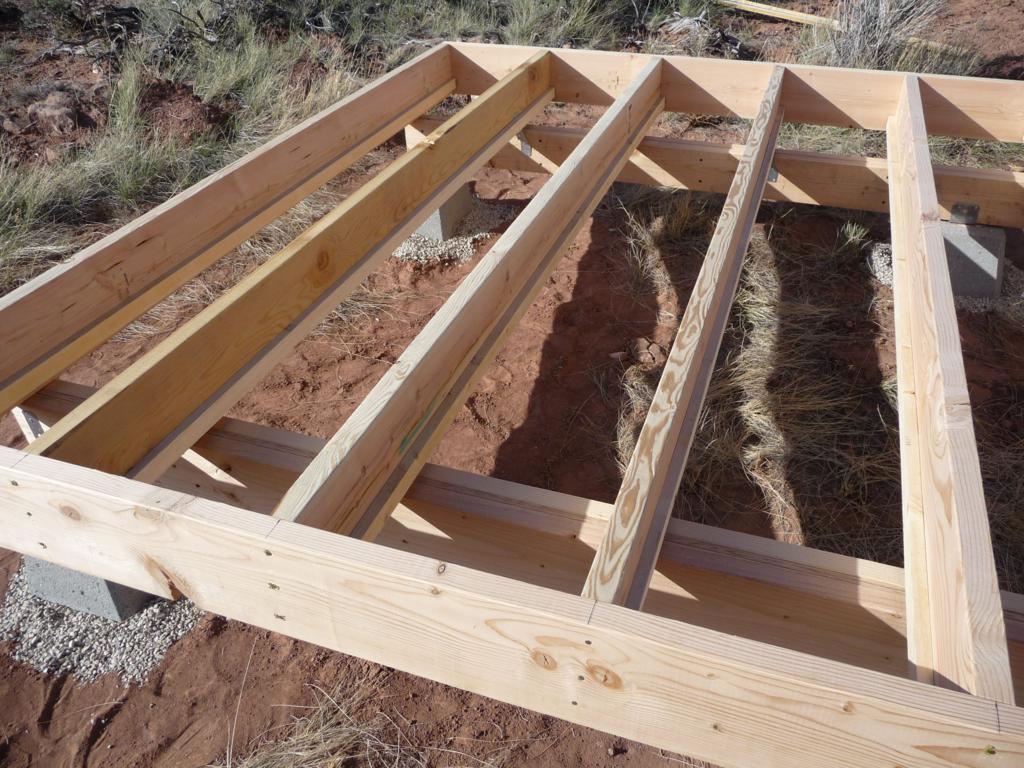
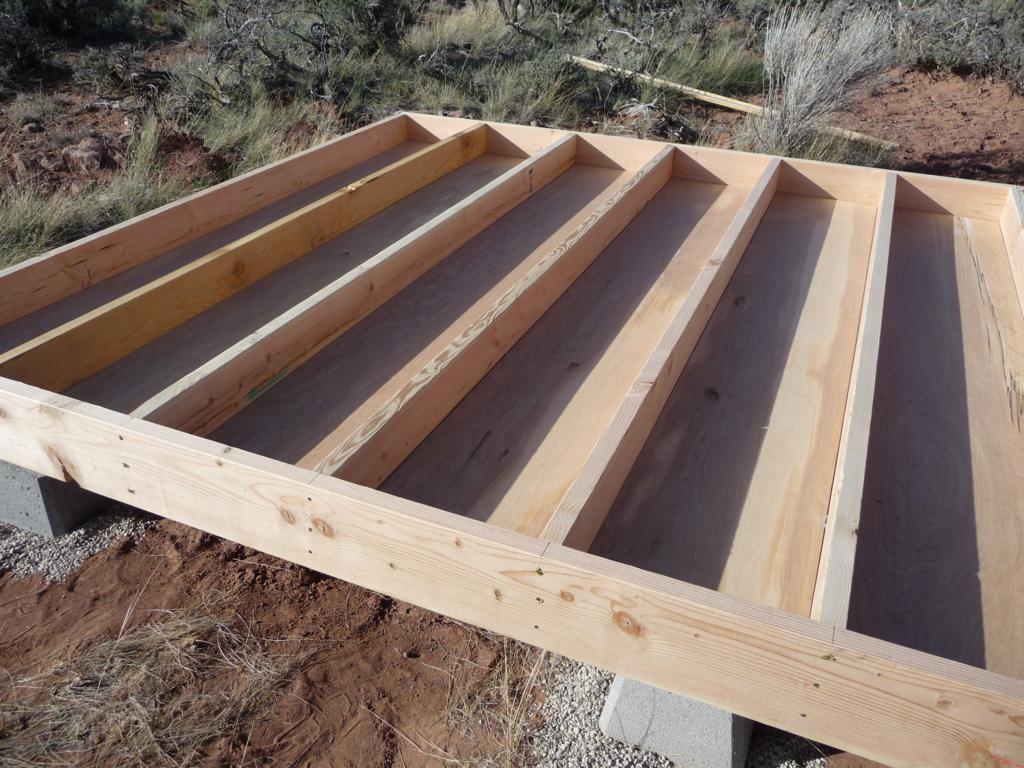
For the floor, I used 2x8 joists on 16” centers. The floor is 12’ by 8’ so the floor overhangs the beams by roughly a foot on each side.
I added insulation to the floor by first nailing 1x2’s along the bottom of each joist and then laying a piece of 1/4” hardboard in the joist spaces, resting on the 1x2 strips. This forms a bed for the insulation to rest on.
Adding the insulation was then as simple as laying it into the joist spaces. I used 5-1/2” thick fiberglass insulation.
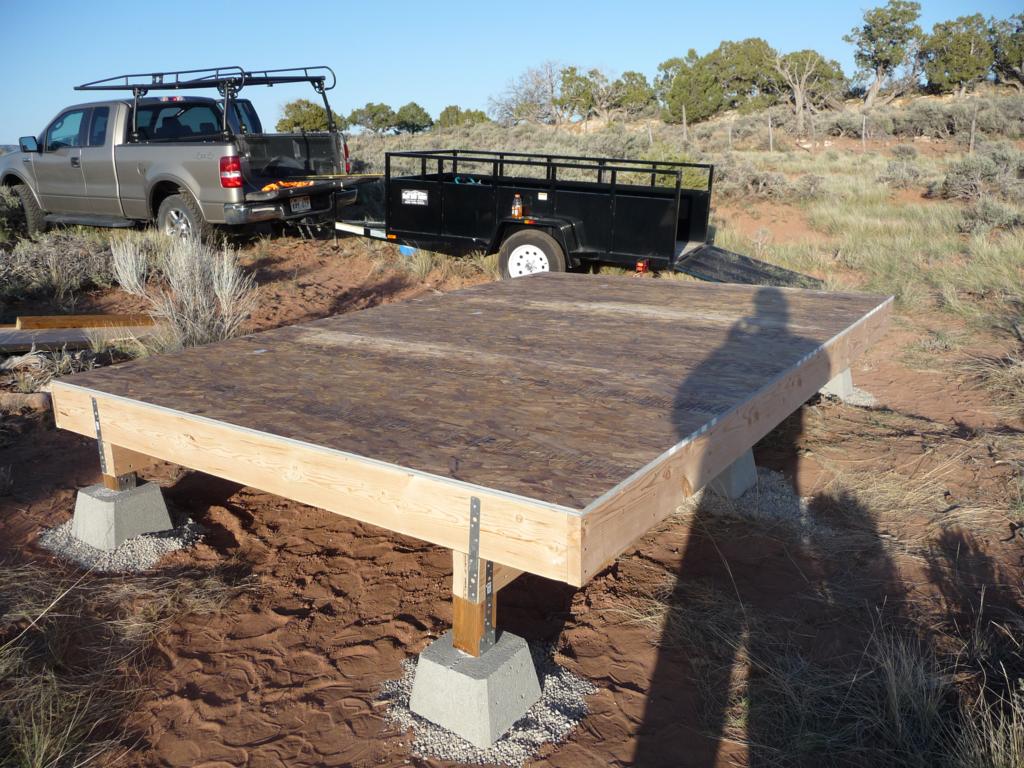
Finally, three sheets of 3/4” tongue and groove OSB are nailed onto the floor joists.
The resulting floor turned out perfectly flat and level and was very solid to walk around on.
Building a Mini-Cabin: Part 4 Framing
Sunday, Jan 03, 2010
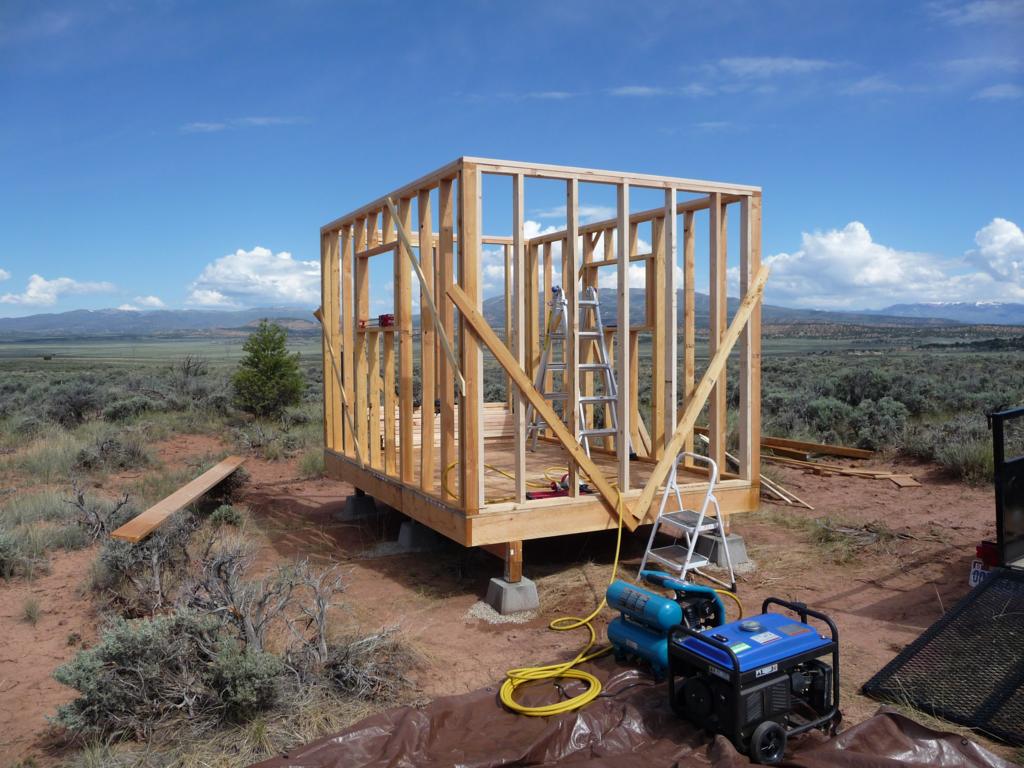
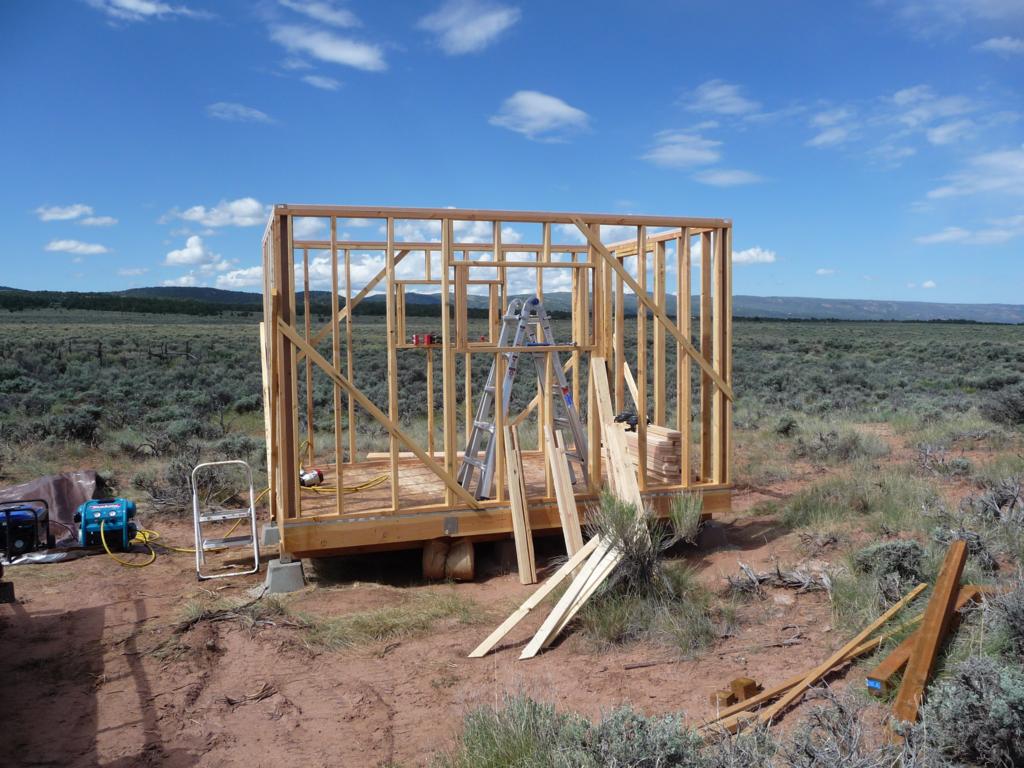
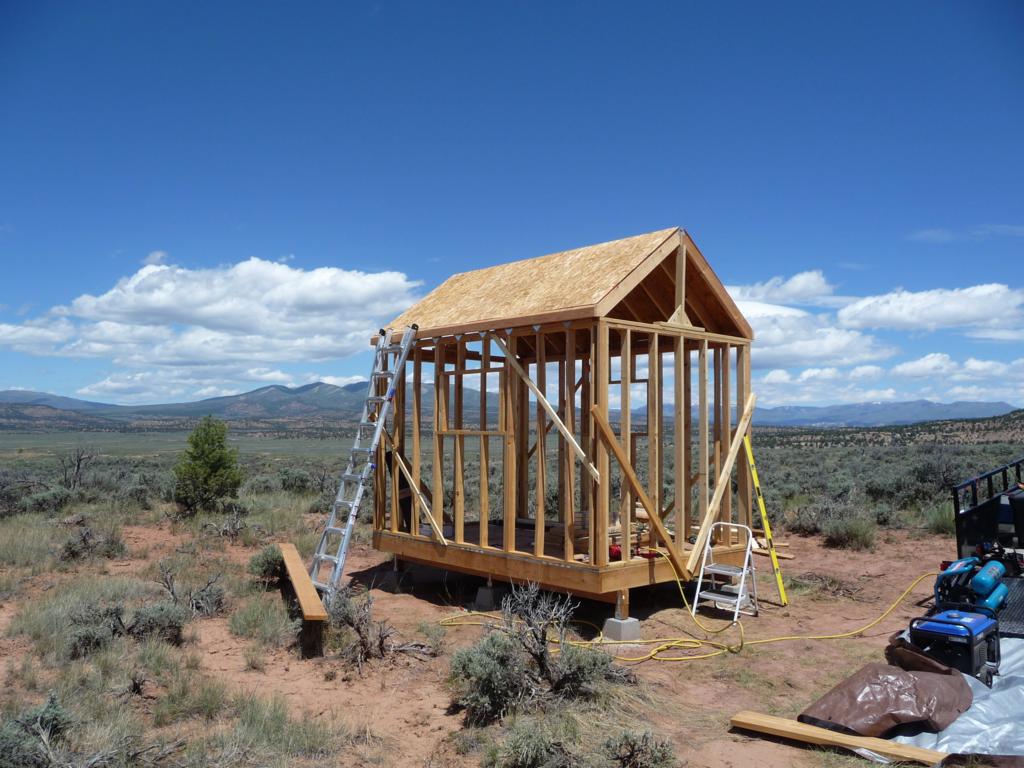
Details of framing the mini-cabin are not particularly notable. I used standard 2x4 framing for the walls. The walls, including the top cap, are 7’ 3-3/4” high so that the total height including the floor is 8’. I made them this height so that an 8’ high sheet of siding would cover the entire exterior without any cutting.
The front wall is framed for a door and each side has one window opening.
NOTE: I know I didn’t frame the door and windows properly, i.e. using a header, but at this point I was still just building a shed. It was a conscious decision to save time.
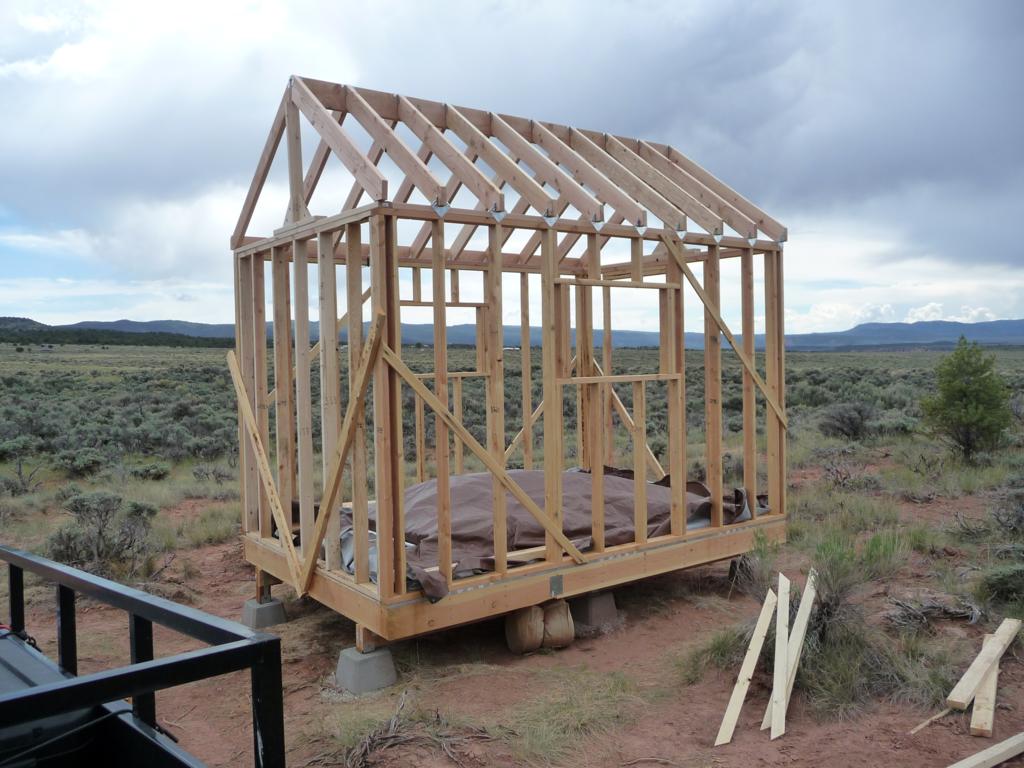
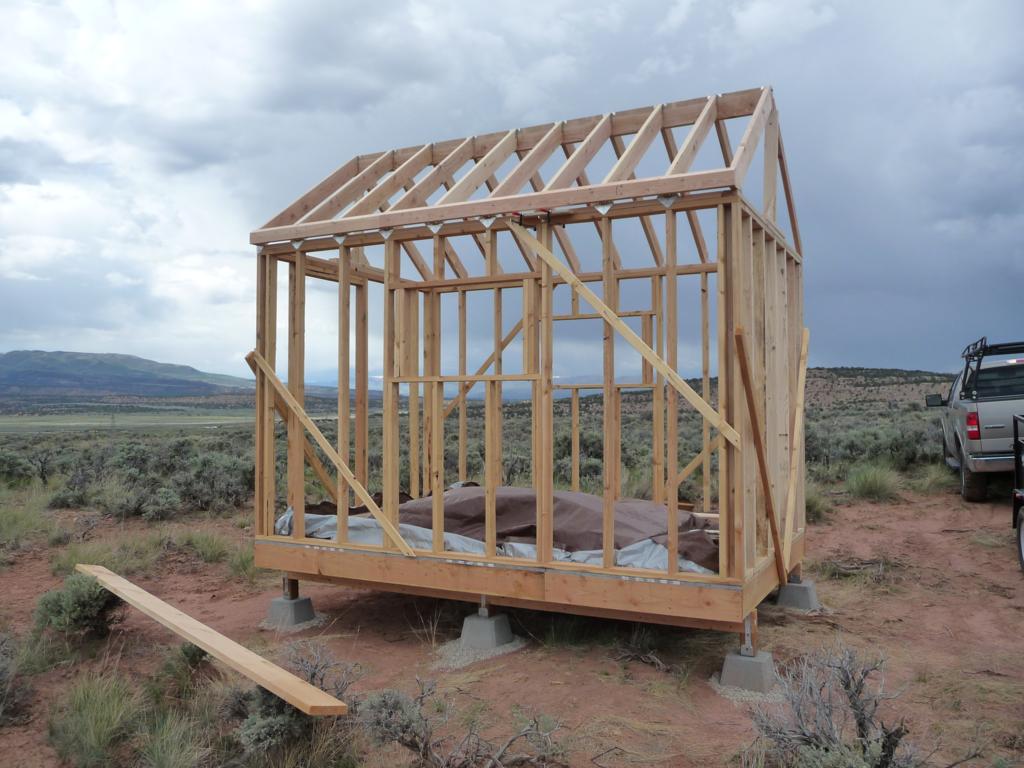
For the roof, I used a 2x8 as a ridge beam and the rafters are 2x6. I used hardware ties to attach the rafters to both the ridge beam and the walls. The overhang the walls by about 2 inches.
I built some supports from 2x4’s to hold the ridge beam up while attaching the rafters. These supports remained as part of the gable framing.
I mitered the edge of some 2x4’s to match the roof pitch and nailed them to the ends of the rafters. The pitch of the roof is 8/12 making it easier to calculate the measurements as everything forms a 3-4-5 right triangle with known angles.
Finally I added 5/8” OSB sheathing to the roof.
Building a Mini-Cabin: Part 5 Roof/Siding
Sunday, Jan 03, 2010
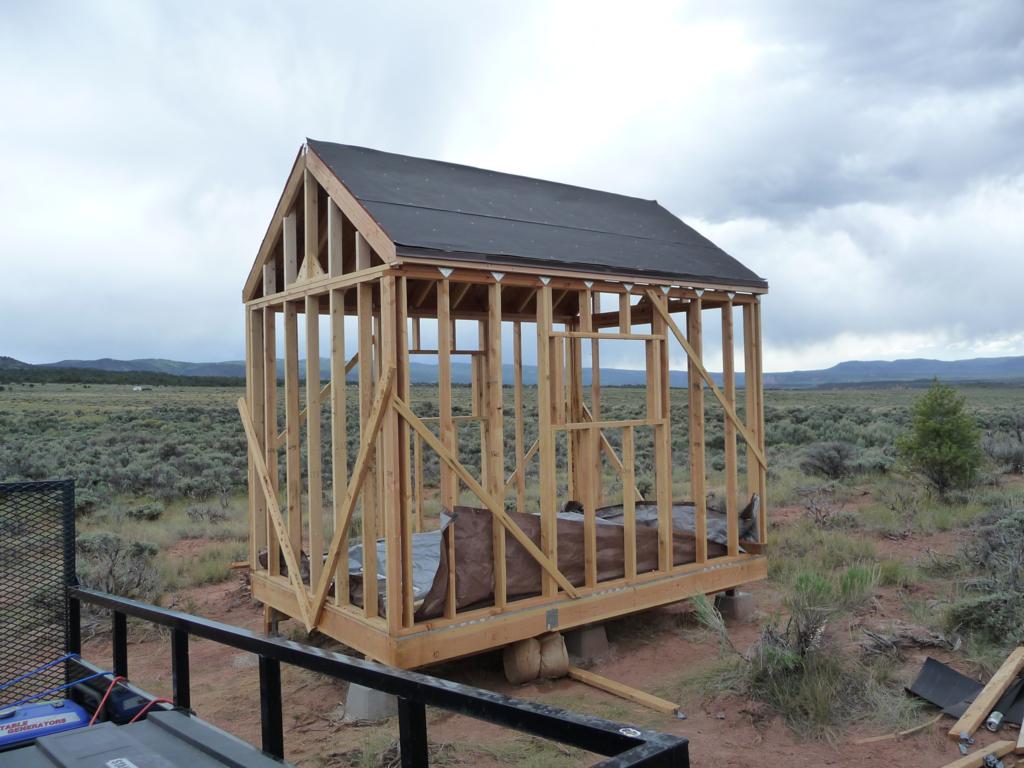
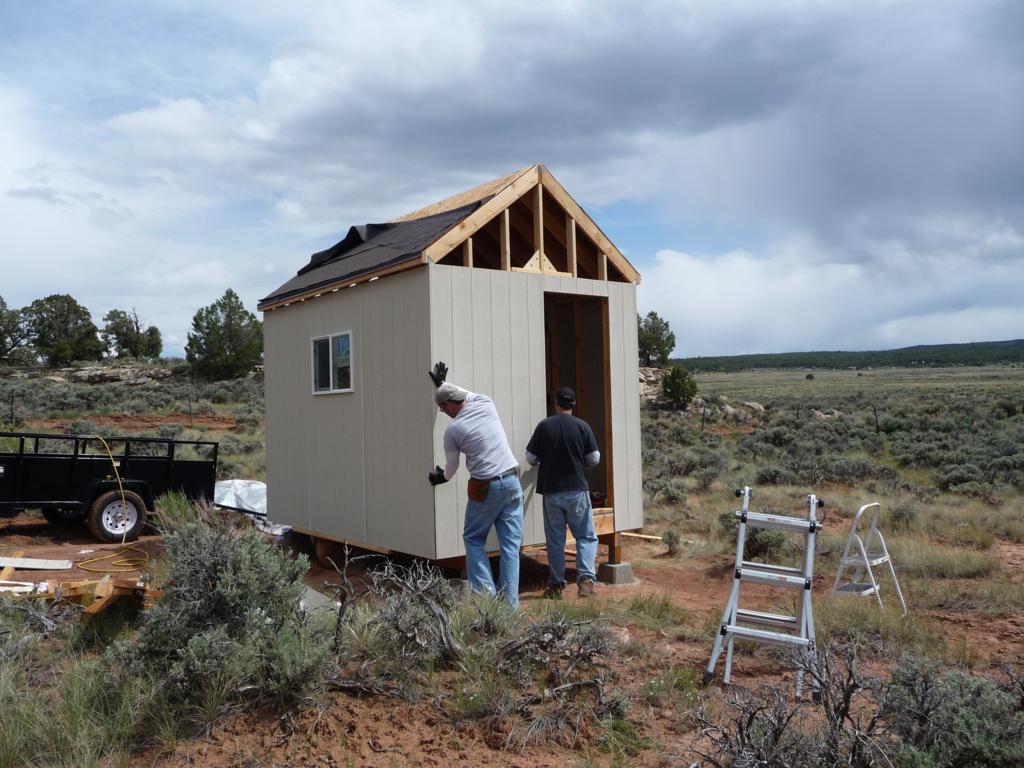
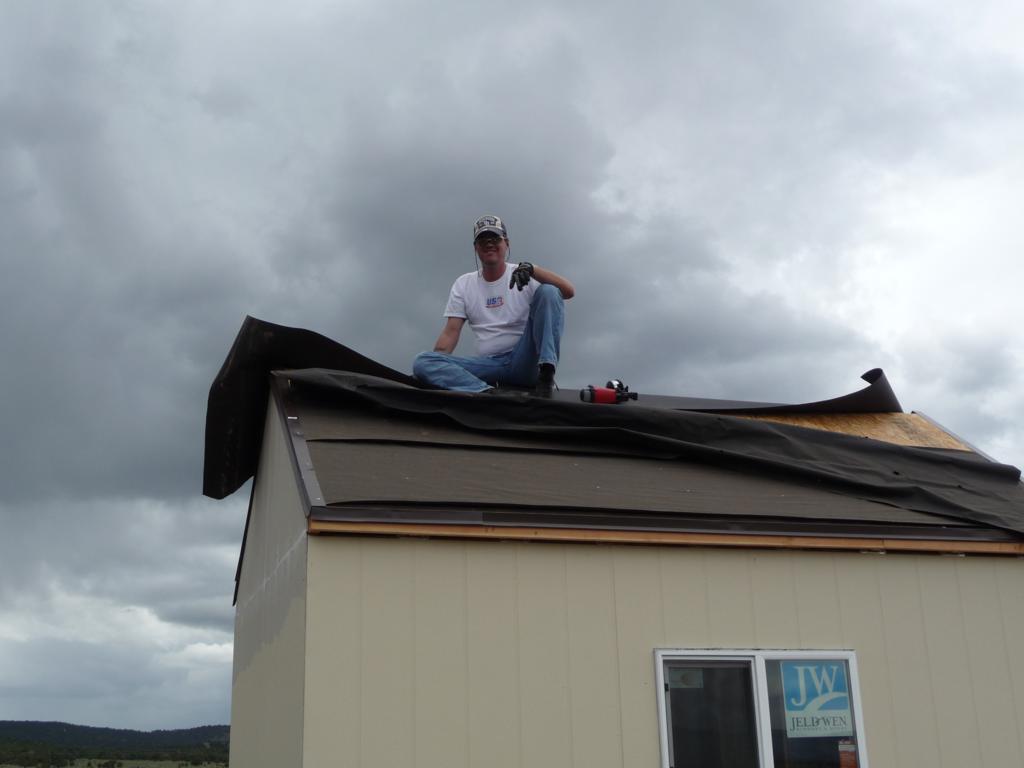
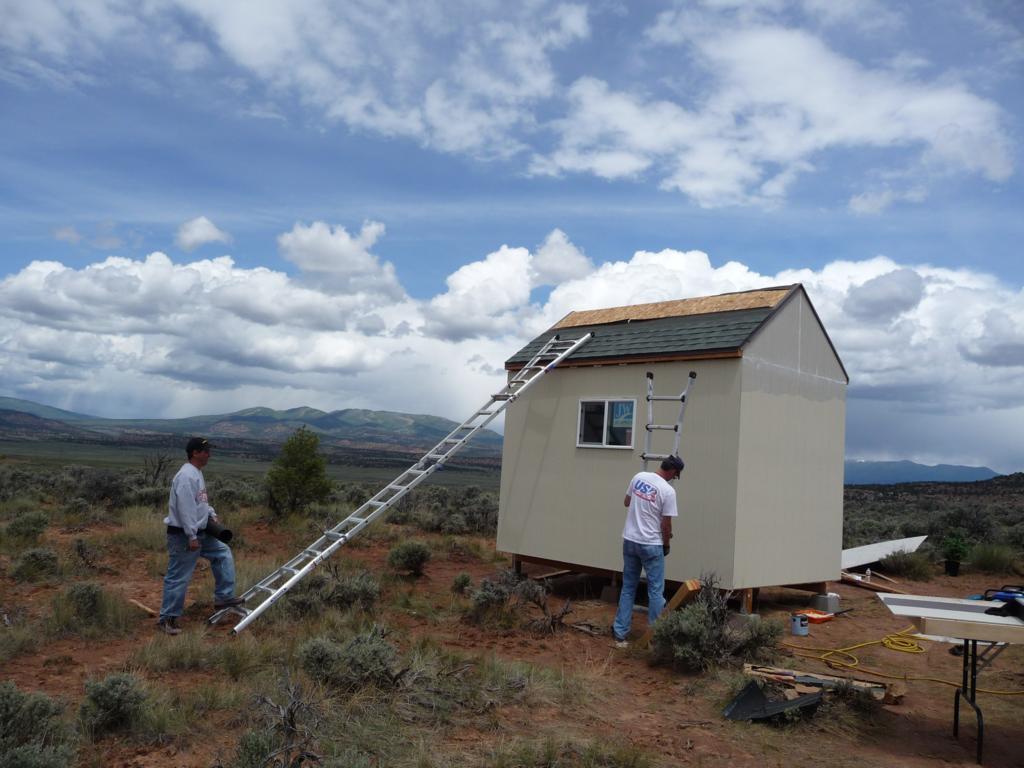
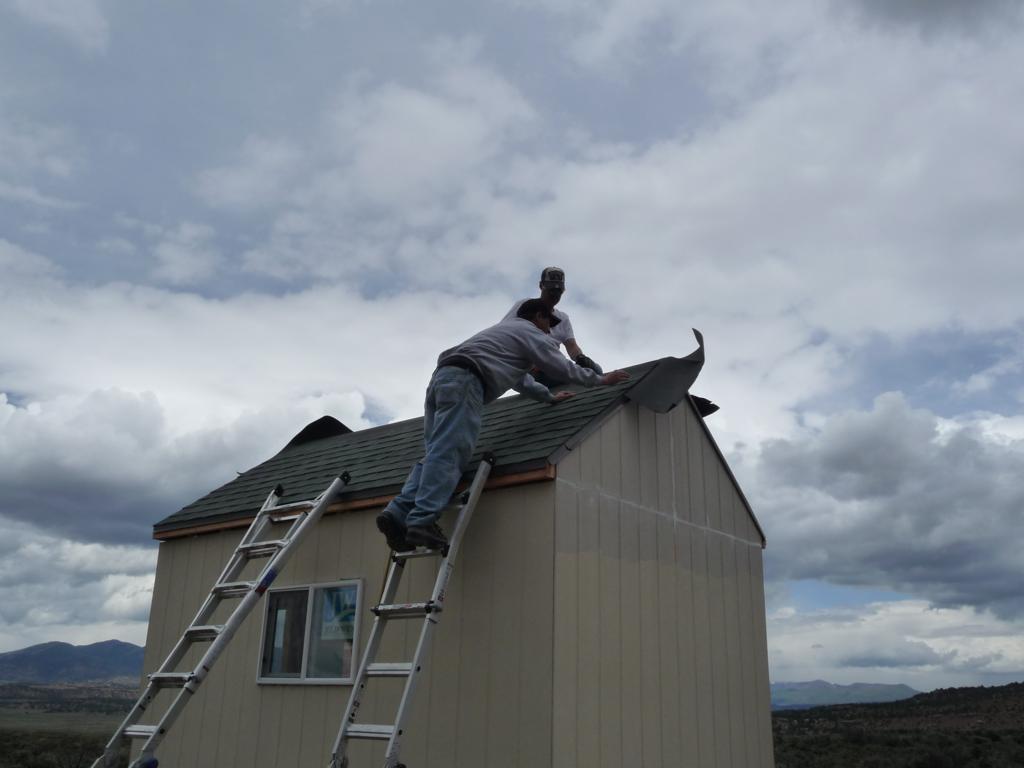
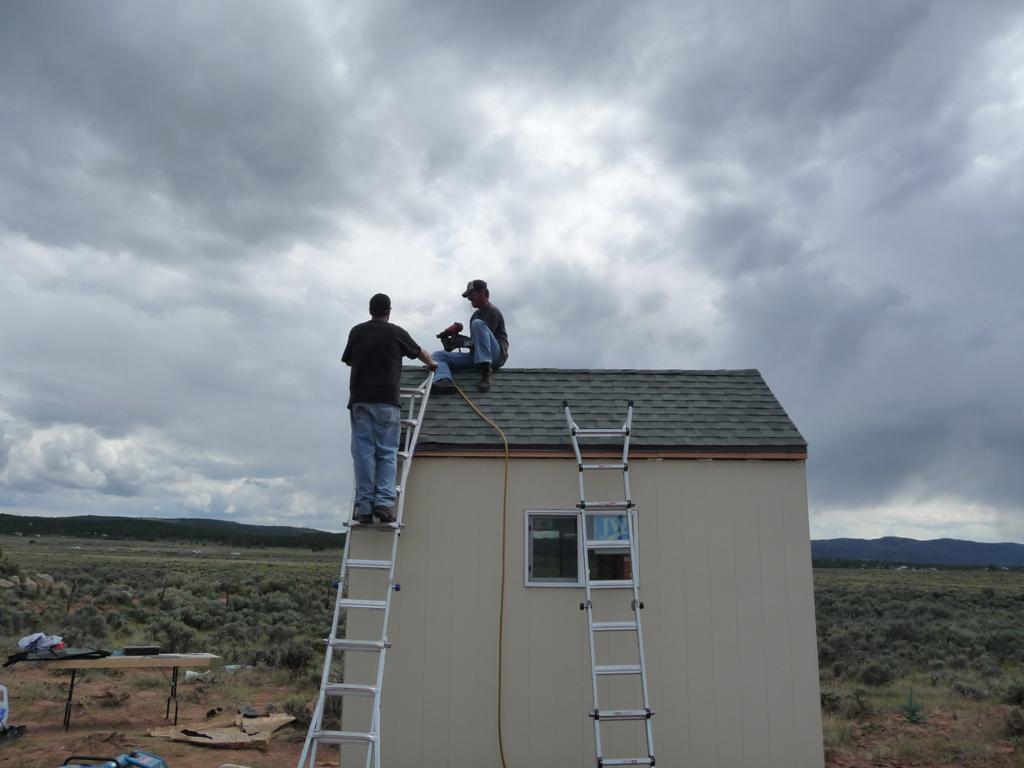
For the roofing, I used architectural shingles over asphalt felt. I bought the architectural shingles because I had read that because of their pattern I would have to make less cuts on the ends of the runs but I don’t really think that was true. I used the felt because it was a lot cheaper than some type of synthetic underlayment. The roofing felt is easy to work with but does tear easily. I put the felt up one weekend and most of it had blown off by the next weekend when I returned to put the actual roof on.
Installing the shingles went quickly because it’s a small roof, I had a friend helping me, and I had a roofing nailer.
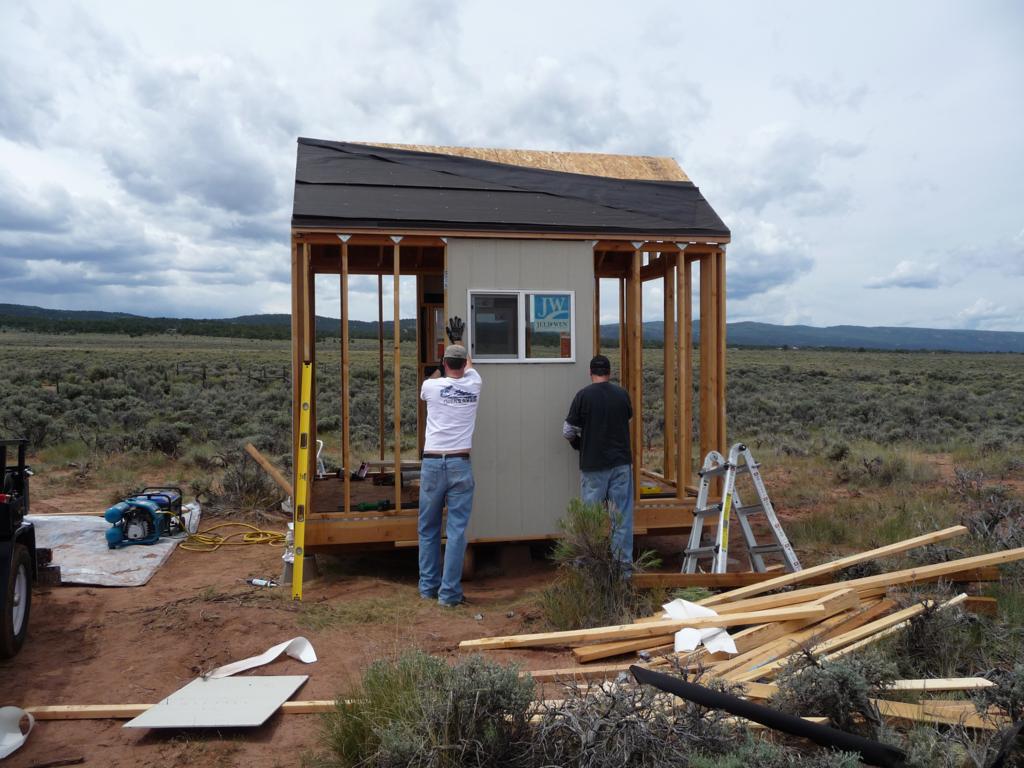
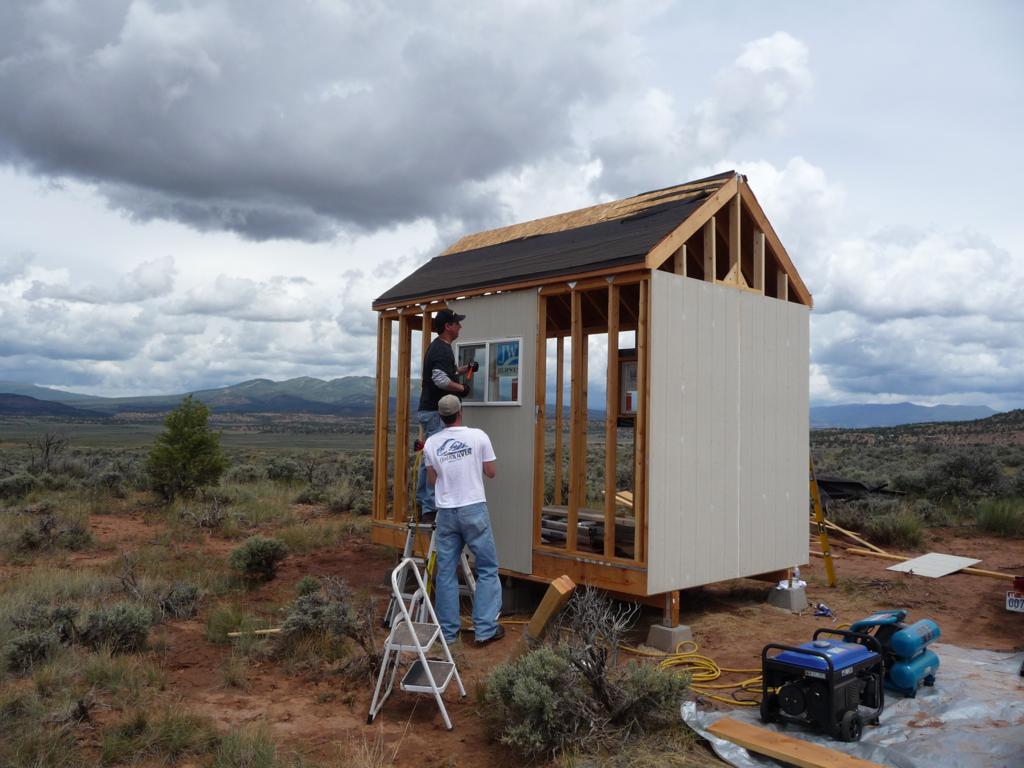
For the exterior siding I used 4x8 sheets of Hardie Board because it requires little maintenance, paints and caulks easily, and should last virtually forever. The downside is that it’s heavy, is messy to cut, and doesn’t take fasteners well. Since I had help, the weight wasn’t too big an issue but the fastening turned out to be a problem. I had used Hardie Board on a previous shed I had built and we had to pre-drill holes for nails when attaching the siding. This time, I tried using the framing nailer with shorter nails. It appeared initially that it was going to work but we eventually came to the conclusion that the nail depth wasn’t consistent enough to avoid damaging the siding and ended up pre-drilling and driving standard nails.
I don’t think I’ll use cement fiber-board as siding again. The finished product is nice but it’s just too much trouble to work with.
Building a Mini-Cabin: Part 6 - Porch
Sunday, Jan 03, 2010
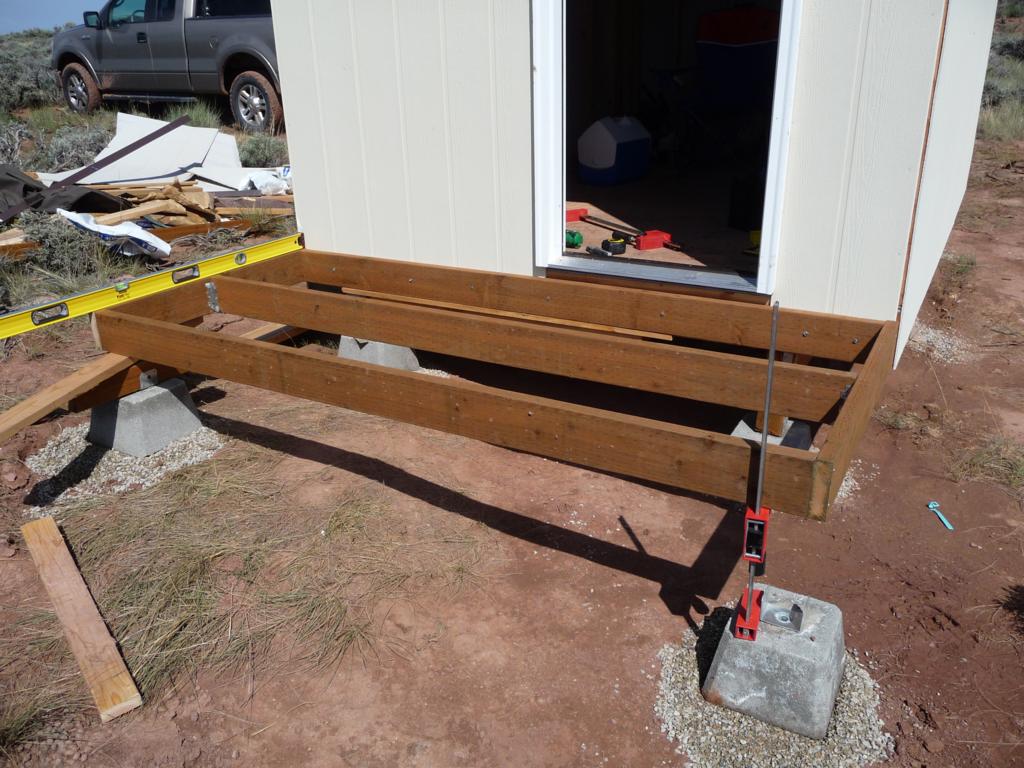
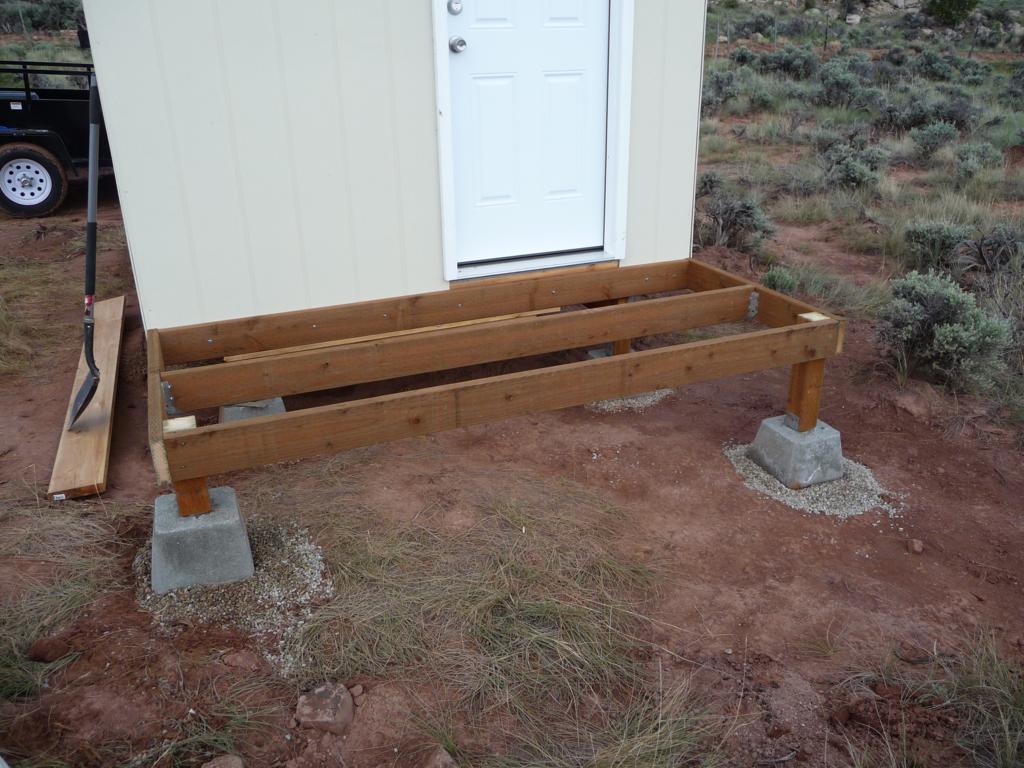
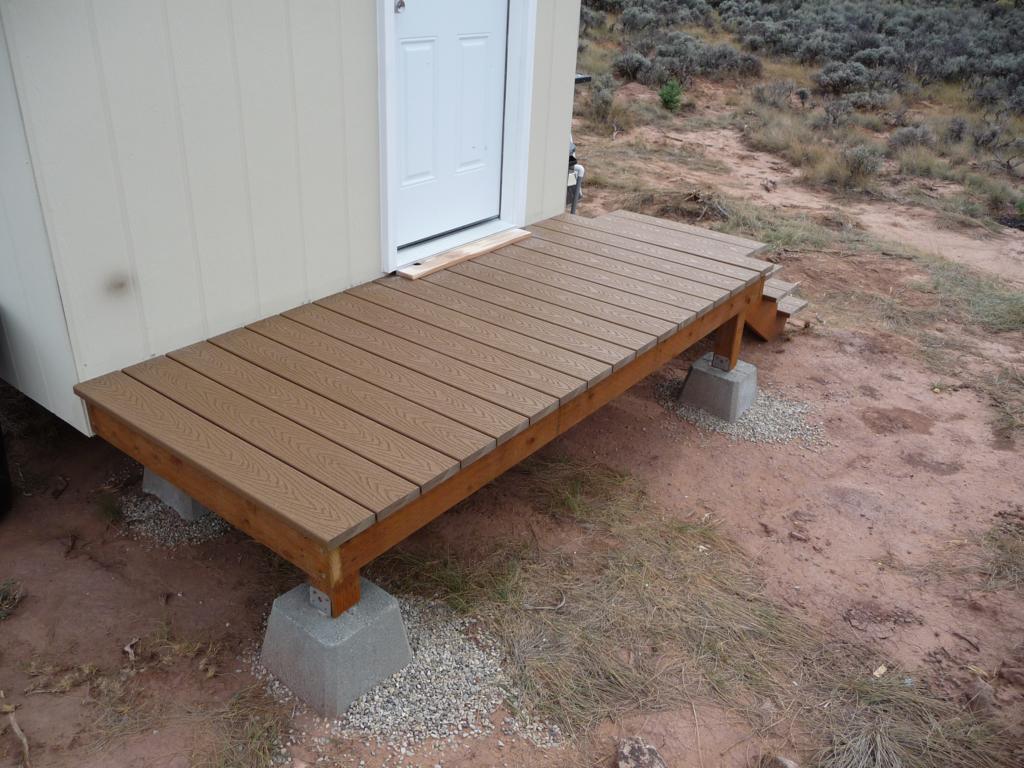
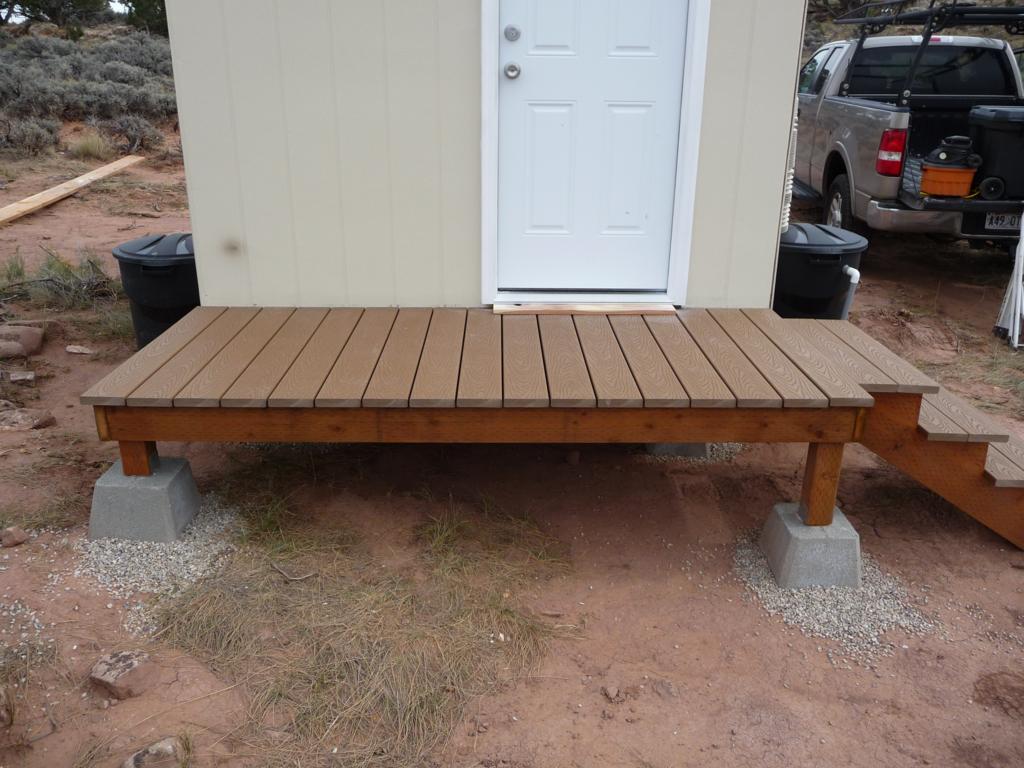
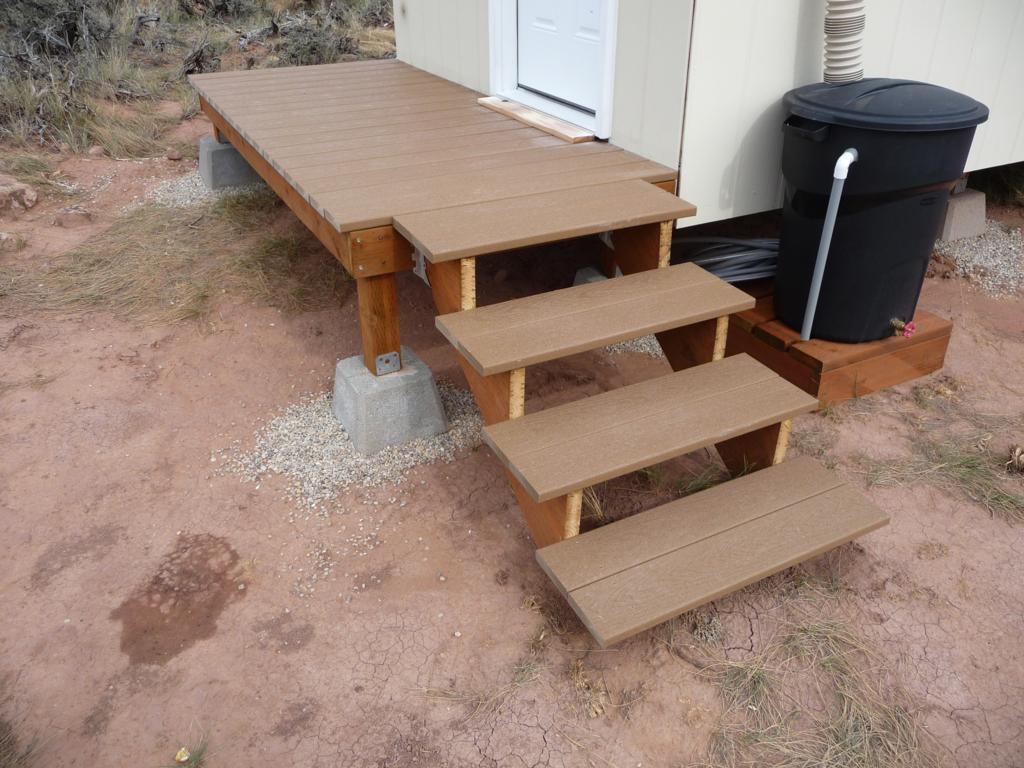
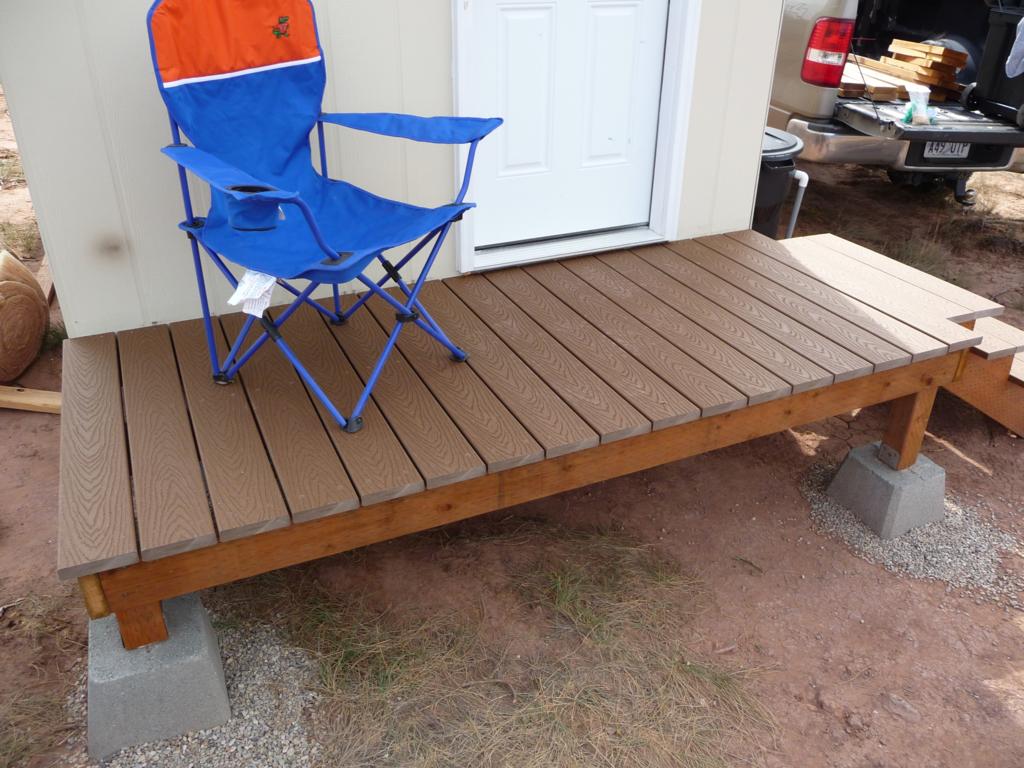
I added a “mini-porch” to the mini-cabin using two more deck piers and a frame made of treated 2x8’s. The porch is 8 feet by 42”. The frame is attached to the front of the cabin with lag bolts and the other side sits on the deck piers.
I used composite decking for the floor of the porch.
I also built some steps using 2x12’s for the stringers. I found some instructions on the internets for cutting the 2x12’s for a given rise/run and cut them out with a circular saw and jigsaw. The stringers attach to the porch frame using joist hangers.
The finished porch is very solid.
Building a Mini-Cabin: Part 7 Interior Siding
Sunday, Jan 03, 2010
With the exterior of the project largely done, I started to consider the interior. There are a few things I didn’t detail in previous posts relating to the exterior so I’ll summarize them briefly:
- I installed two Jeld-Wen windows which are 24”x36” and purchased at Home Depot. The were attached directly to the framing and covered with the siding. I also used some sticky-backed window flashing type stuff they had to keep water out. I just followed the directions on the package.
- I installed a 30” pre-hung steel door and a lockset with a deadbolt.
- I used sheet metal flashing on the roof where appropriate.
- The exterior siding was caulked and painted.
- I added some 2x4 strips under the roof overhang to form a kind of eave.
As for the interior siding, I considered using drywall. My issues with drywall were that it’s difficult for one person to tote around and I’m a terrible drywall mudder. I can hang it okay and I understand the theory behind the mudding process but I’m just not good at it.
My next idea was to just use paneling like in my folks house in the ‘70’s. I went to the local HD and found real wood paneling was kind of spendy so I bought the cheapest stuff they had for about $11 a sheet. For $11 what you get is basically cardboard with a pattern painted on one side that looks kind of like paneling. I wasn’t that excited about it but wasn’t wanting to spend a lot of money on the “shed.”
Before I actually installed the “cardboard” I had an idea. Home Depot sells these cedar fence boards which are 6’ long by 5-1/2” wide for about $1.50 ea. on sale. I thought I could use them for the interior walls. The problem is they are very rough and the edges aren’t very straight. I decided I could take care of that bought about 80 or so to test my theory.
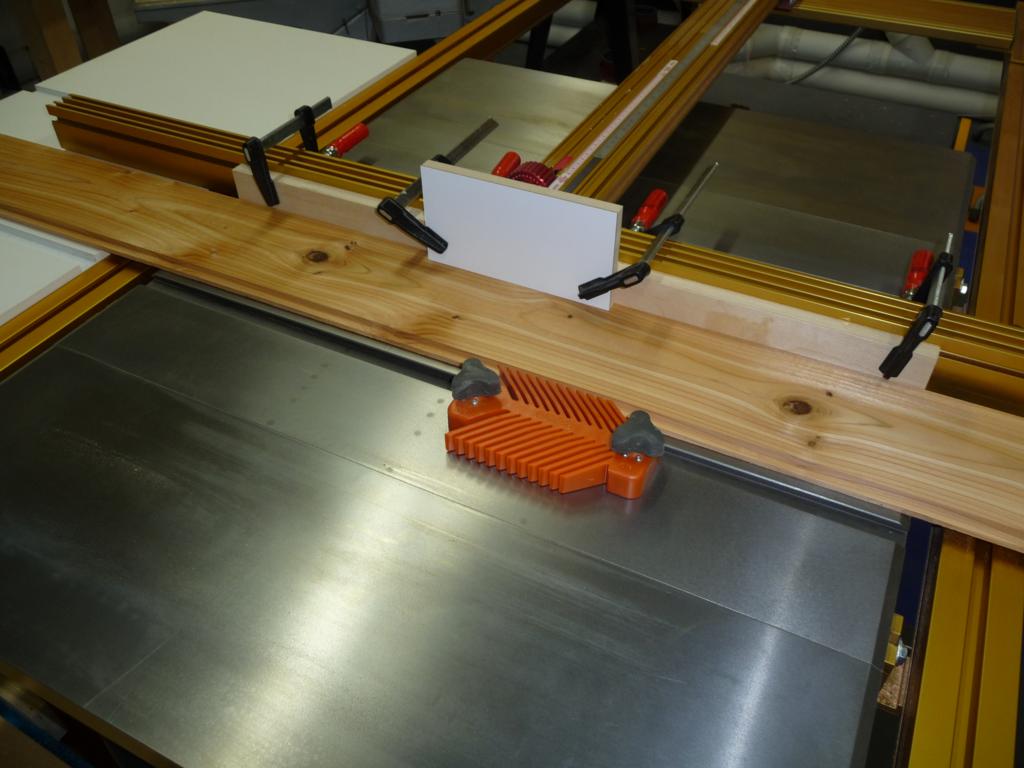
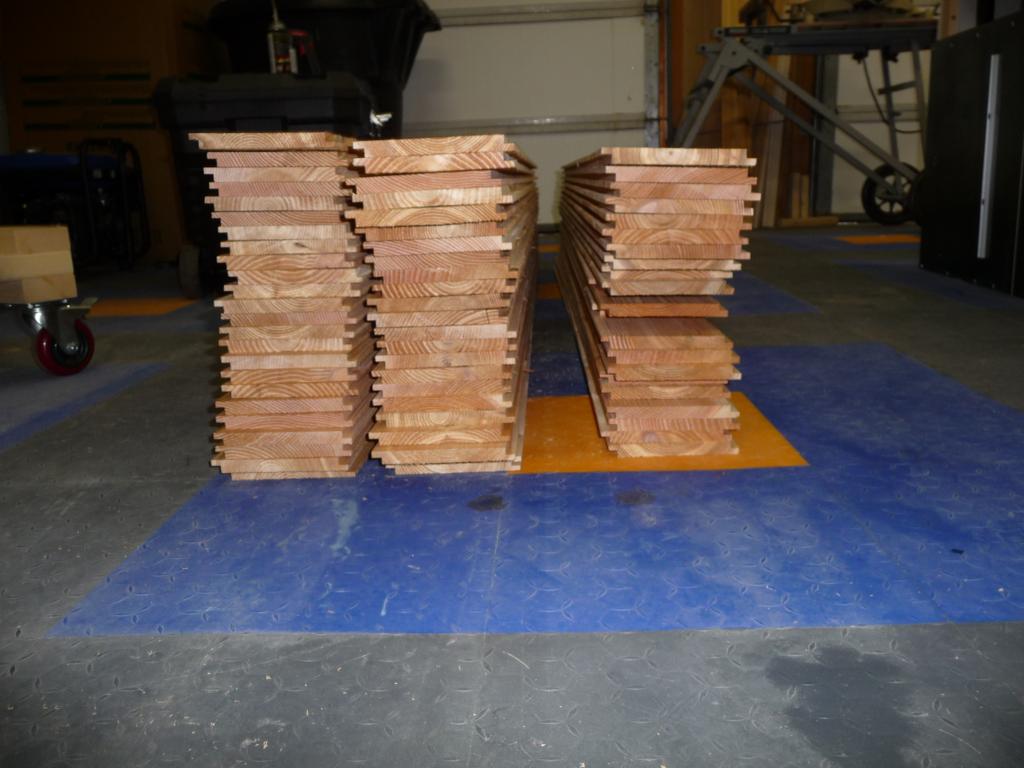
So I brought them home, ran one side through the planer to smooth them out, jointed one edge, trimmed the other edge on the table saw, and cut rabbits in both edges so I could overlap them during installation. I also cut off the top of each board because they were angled at the corners like a fence board.
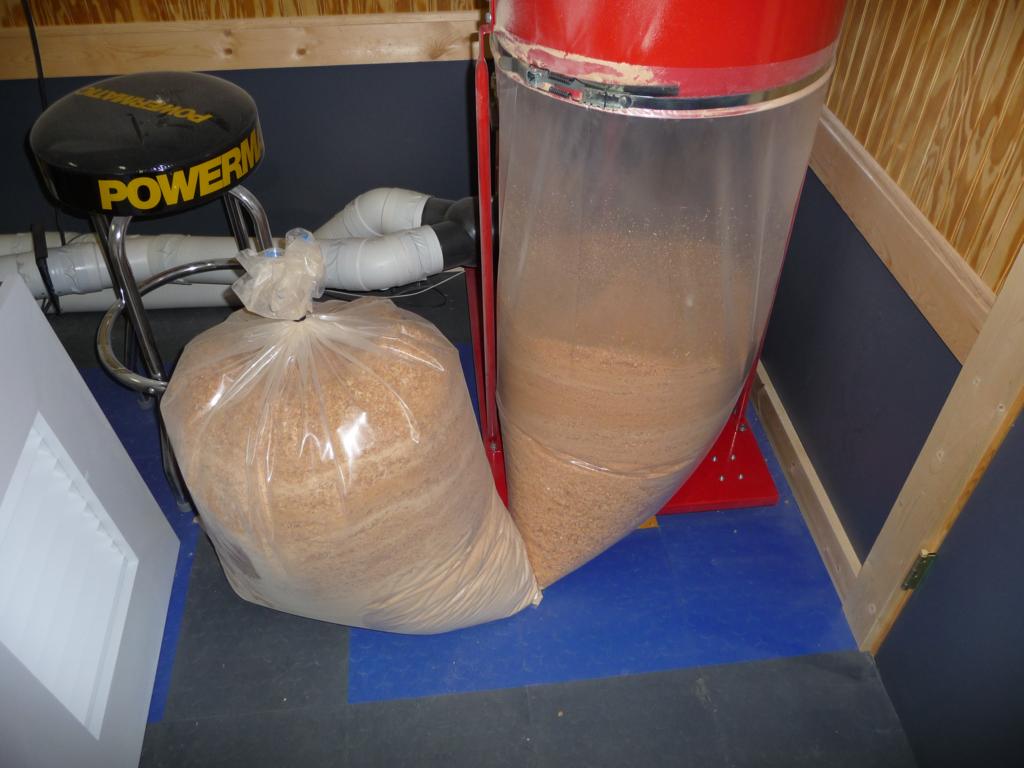
The results were good. I was impressed with my ingenuity. Over the next three weeks I purchased and prepared enough boards to finish the interior of the mini-cabin which was about 230 boards. It took forever to prepare them all and by the end I was wishing I had stuck to the cardboard paneling. I had to replace planer blades once and change my dust collector bag about four times. I considered getting a hamster as I would have had a lifetime supply of cedar shavings for his cage.
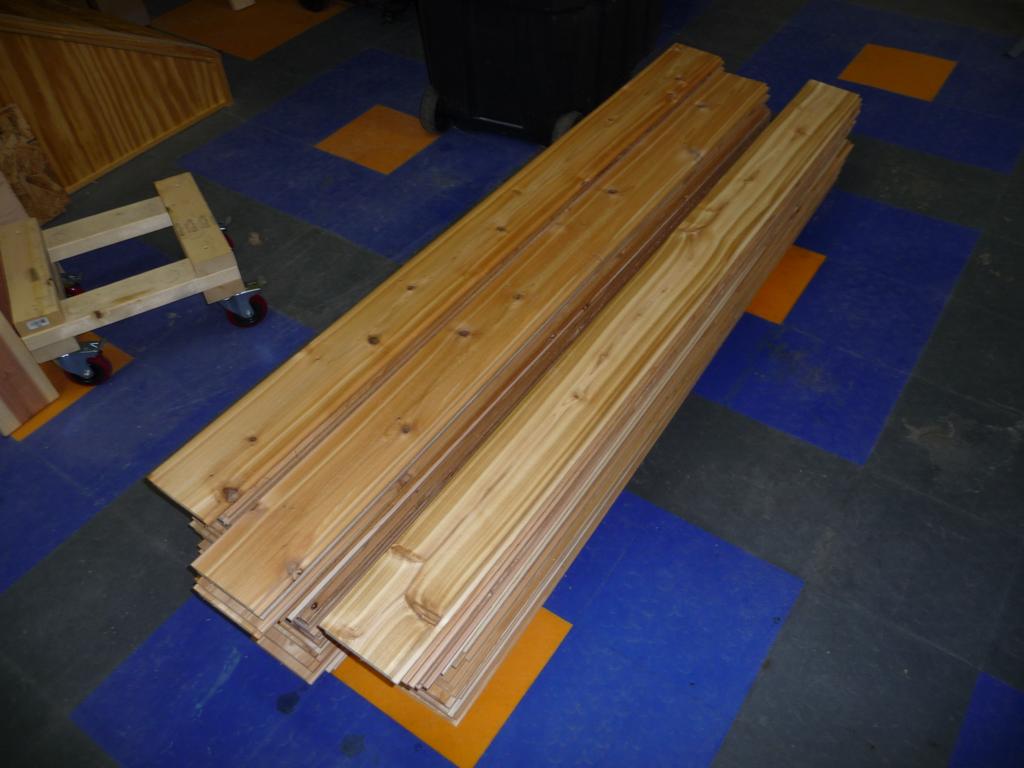
In the end, I’m glad I did it and it turned out well. Here are a few pictures of the first batch I prepared.