
One man's struggle to take it easy
Building a Mini-Cabin: Part 3 - Foundation/Floor
Sunday, Jan 03, 2010
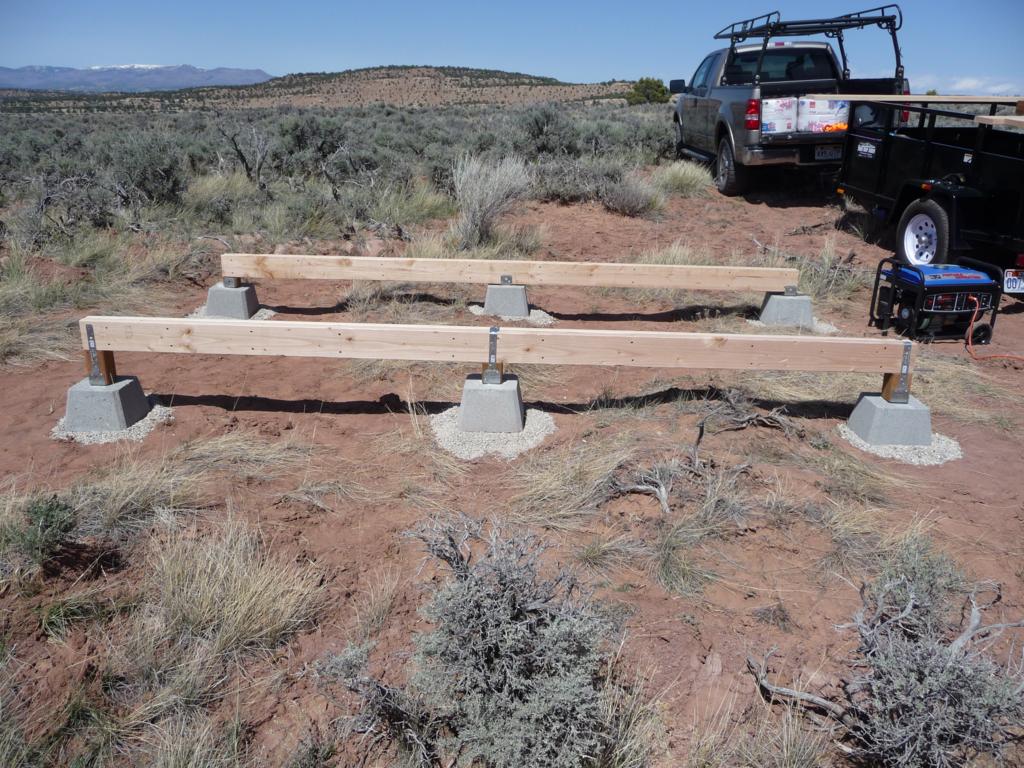
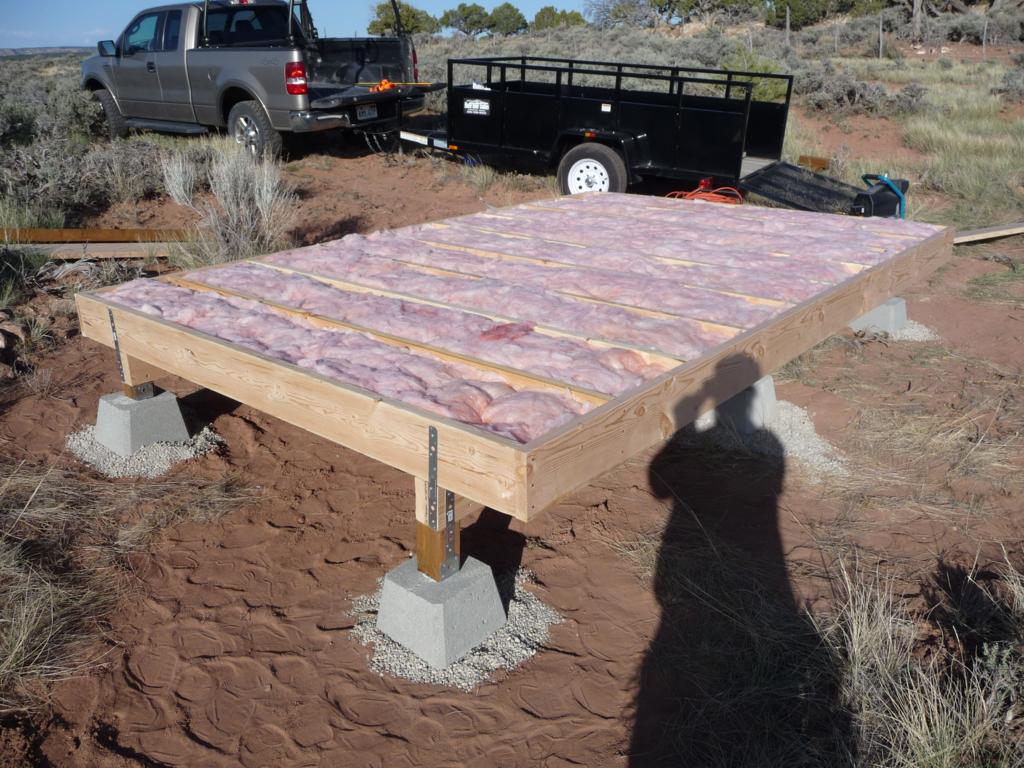
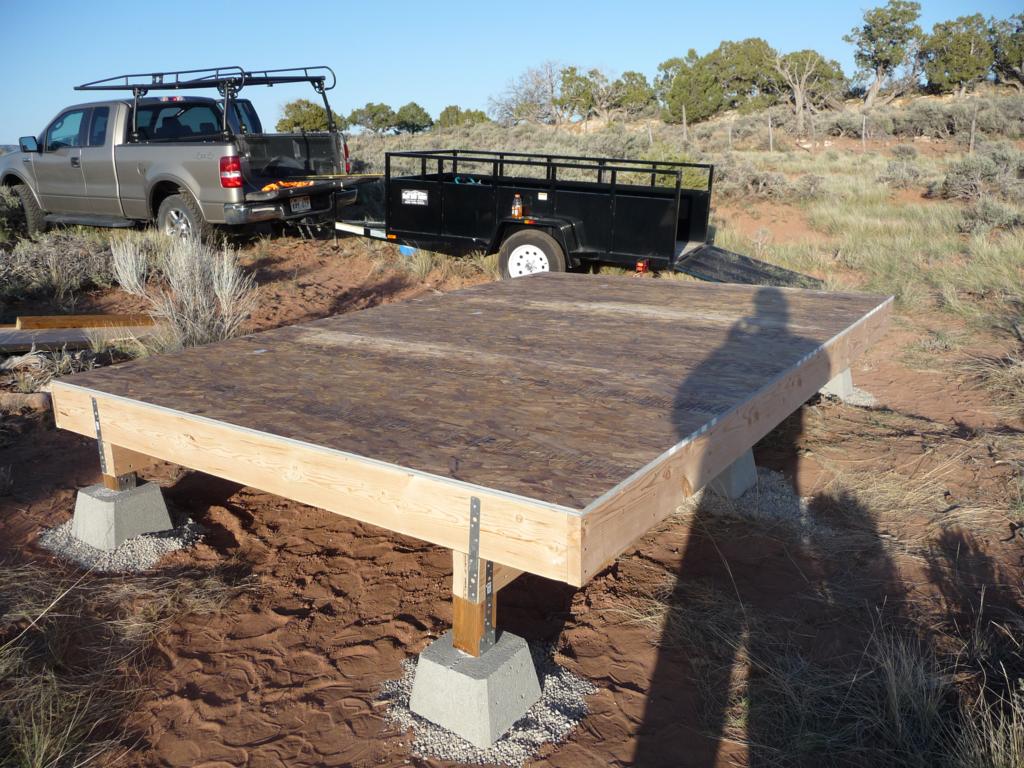
For the foundation of the mini-cabin, I used deck piers sitting on gravel filled holes. The holes are only about six inches deep. Six inches is well above the frost line so this was a big shortcut but if the structure starts to move due to frost heave I figured I could just jack it up and make it level again.
I built two 12’ beams, each beam consisting of two 2x6’s with a strip of 1/2” plywood sandwiched between the 2x6’s, screwed and glued together. The resulting beams are 3-1/2” wide allowing them to fit the brackets of the deck piers.
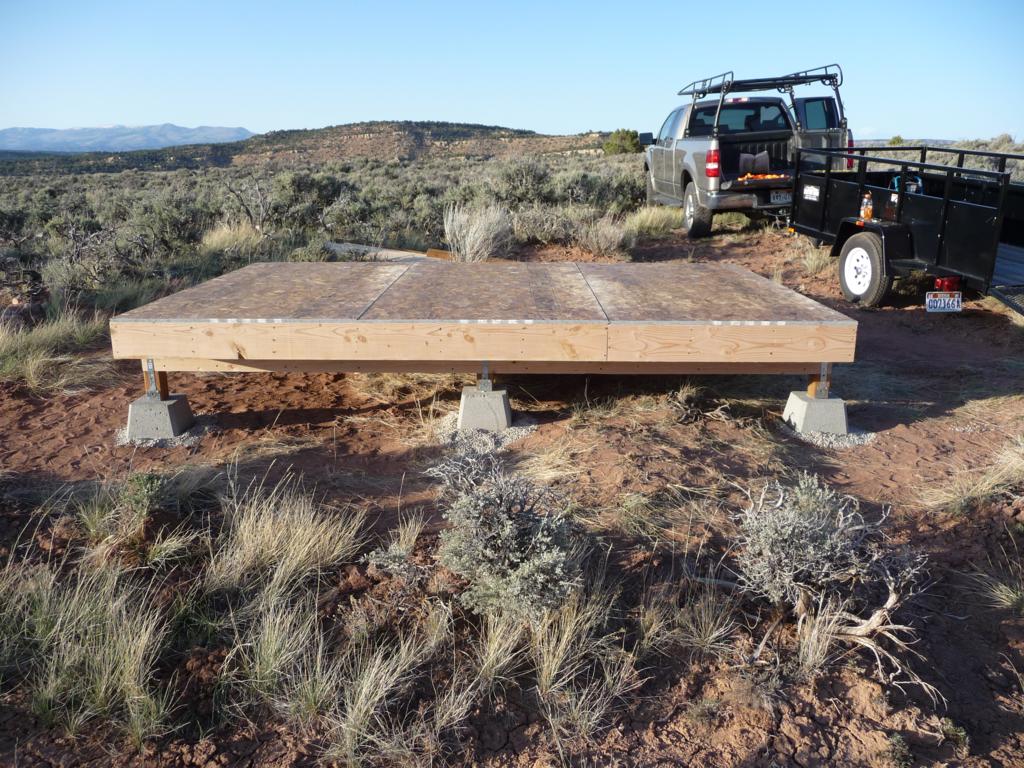
I used three deck piers per beam and the beams are placed six feet apart. To level the beams, I used treated 4x4 posts where necessary.
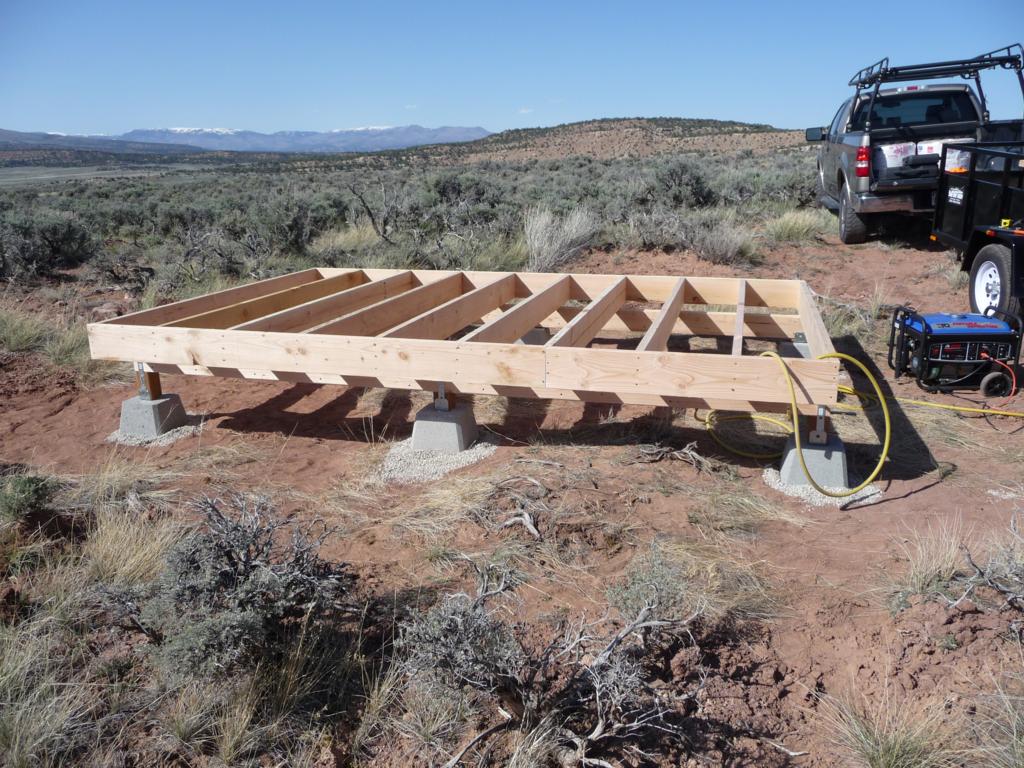
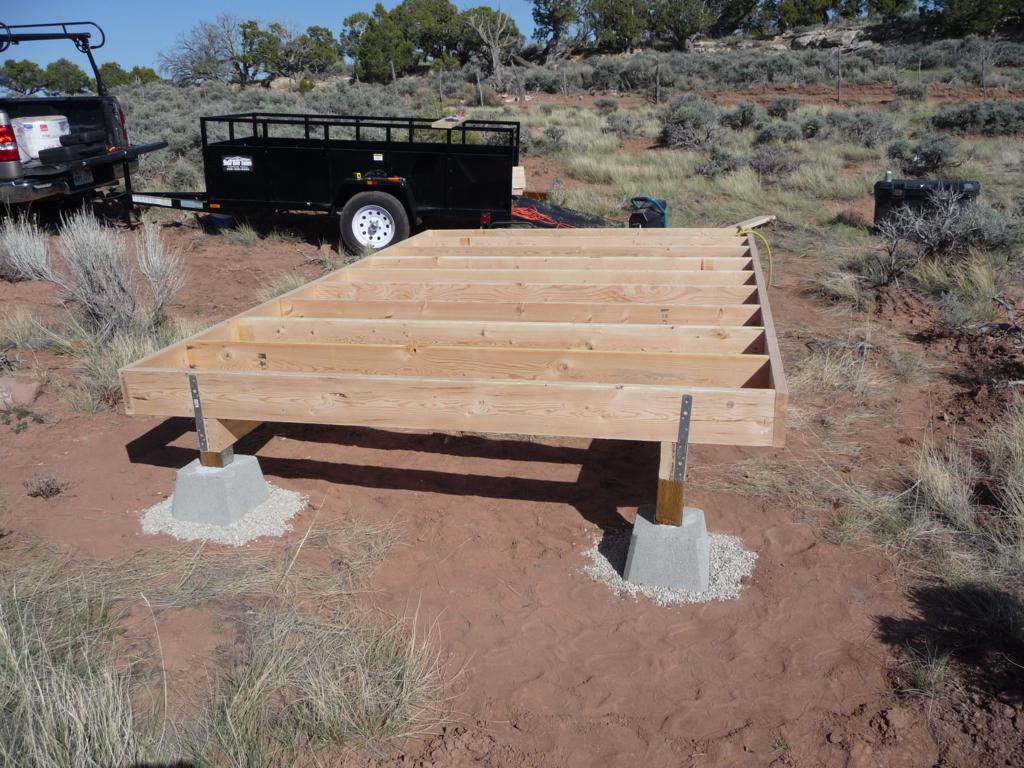
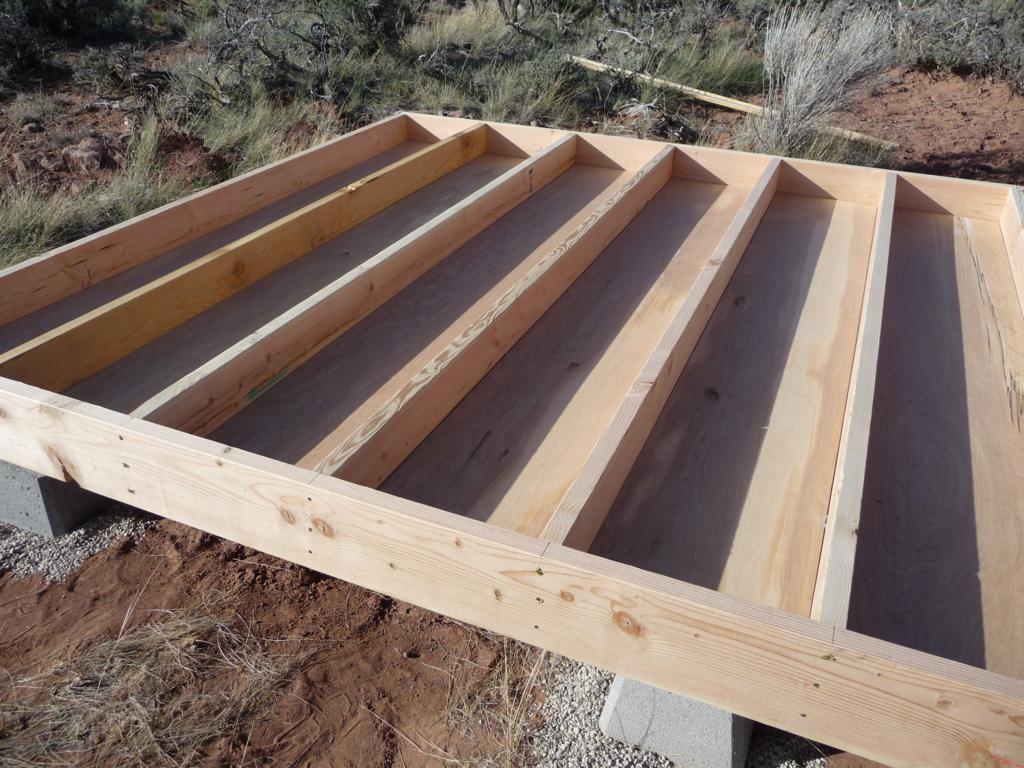
For the floor, I used 2x8 joists on 16” centers. The floor is 12’ by 8’ so the floor overhangs the beams by roughly a foot on each side.
I added insulation to the floor by first nailing 1x2’s along the bottom of each joist and then laying a piece of 1/4” hardboard in the joist spaces, resting on the 1x2 strips. This forms a bed for the insulation to rest on.
Adding the insulation was then as simple as laying it into the joist spaces. I used 5-1/2” thick fiberglass insulation.
Finally, three sheets of 3/4” tongue and groove OSB are nailed onto the floor joists.
The resulting floor turned out perfectly flat and level and was very solid to walk around on.
I haven't had any issues with squirrels, but for me it's been birds. There aren't a lot of trees in the area and birds like to chip away at the siding, looking for insects I guess. They're also good at drilling holes in my porch roof's interior siding and nesting there. So far they haven't caused any serious damage though.
No hurricanes here but we get the occasional earthquake and it does get windy. No issues with movement and it's been nine years now.
I know we do have termites here but I don't think they are nearly as much of an issue here in the west.
Very interesting that you used so much cantilever. I just kind of guessed what would work for me.
I just noticed this post in on the mini-cabin page and not the main cabin. I haven't really maintained the mini-cabin over the years and it could definitely use some maintenance, but I'm fairly certain it hasn't moved. I still use it for storage but I built a 6x8 shed closer to the main cabin a couple of years ago that's better for storage. I really should fix up the mini-cabin though, given the time I spent on it. As far as I know, it's still structurally sound.
If the wheels need two or more to a single column, twist them inside each other with screws for fastening drywall (gypsum).
Fill them clay diluted in water with sand in proportions of one part of five parts of clay and sand. Give a little to dry and harden.
Put on top of a wooden formwork rails and fill it with concrete (masonry mortar) to set the zero level. Further, all as a description of the article.
No, I didn't use plastic sheeting as a vapor barrier. It's been a while but I believe my research at the time indicated a vapor barrier would be detrimental in my case. The climate here is very dry so that was likely a factor and I don't remember the specifics but I determined that using a vapor barrier could in come cases trap moisture rather than protect against it.
My research indicated that air flow through gaps or holes in the building are a much greater source of moisture issues than moisture diffusing through the floor or walls. Also, in a climate such as mine, where it's cold in the winter and hot in the summer leads to a conflict in whether to place a vapor barrier on the inside or outside of the floor/walls (i.e. inside=cold, outside=hot).
At this point, I've seen no evidence of any kind of moisture or condensation issues. Due to the dry climate, even when I was using a non-vented propane heater to heat the cabin, I did not have a significant increase in condensation in the cabin interior. Even without the vapor barrier the cabin is very tightly constructed and there's little, if any, air leakage to the outside. I think this the the more important element when considering problems with moisture.
I hope this answers your question.
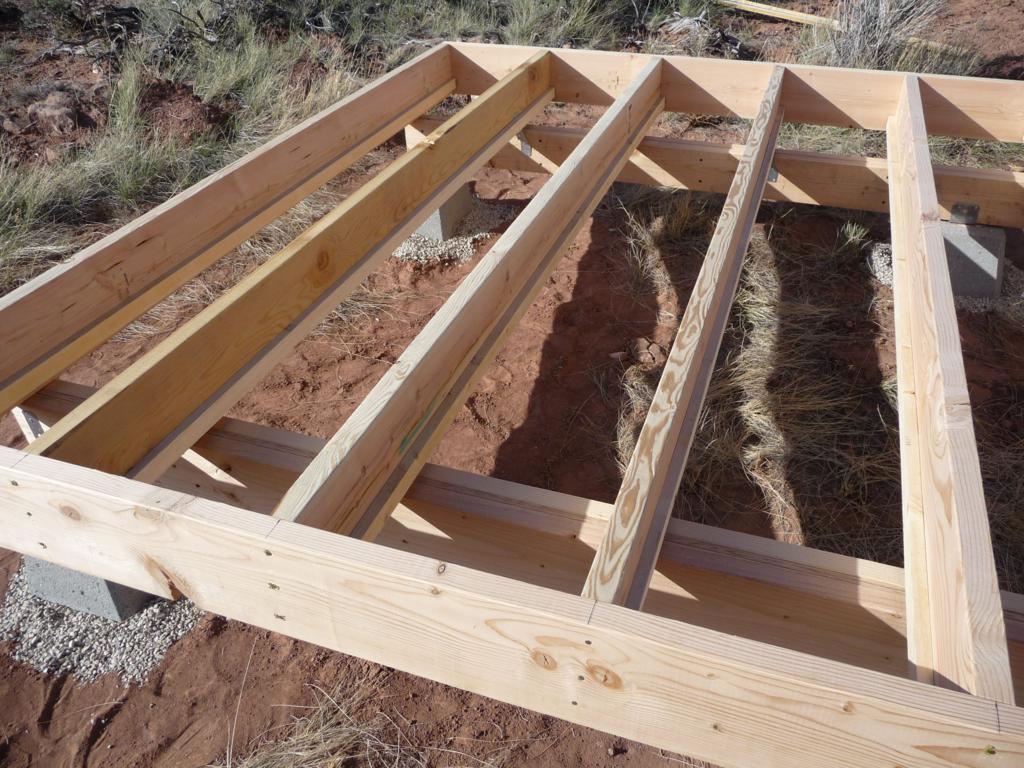
That's a good question. It may be difficult to see in the photos but I did connect each joist to the beams using metal Simpson connectors. You can barely see a couple of the connectors in the fourth photo. So they are connected on the top by the floor sheathing and two places on the bottom
A bigger factor is probably using quality, properly dried lumber. I haven't had any issues with the wood moving too much. Lumber that I buy from Home Depot will cup and bow almost overnight but if I get lumber at a good lumberyard it generally maintains its shape. It could be partially climate related also. It's very dry here and the humidity doesn't vary wildly throughout the year.
I've found that if I go to the lumberyard and hand pick straight wood, most of it will stay straight. I've had cases where I've had wood delivered and a much higher percentage of it was unusable due to movement. Some lumberyards won't let you pick out your own wood so I generally avoid those.
Also, in the case of the mini-cabin the span is less than 8 feet so there's a limit to how much the joists could move. When building the main cabin, with a 14 foot span, I did use blocking on the floor joists. But I've never found the need for any kind of struts or other methods of keeping the joists straight enough.
Sorry I don't have a better answer. One of the reasons I built the mini-cabin was to answer questions like yours before building the main cabin. It turned out that my method is sufficient, at least for the climate I live in.