
One man's struggle to take it easy
Bed and More Solar Panels
Wednesday, Oct 23, 2013
I finished the kitchen cabinets a couple of weeks ago by installing the door/drawer handles, adjusting all the doors, permanently installing the backsplashes, and testing out the sink plumbing.
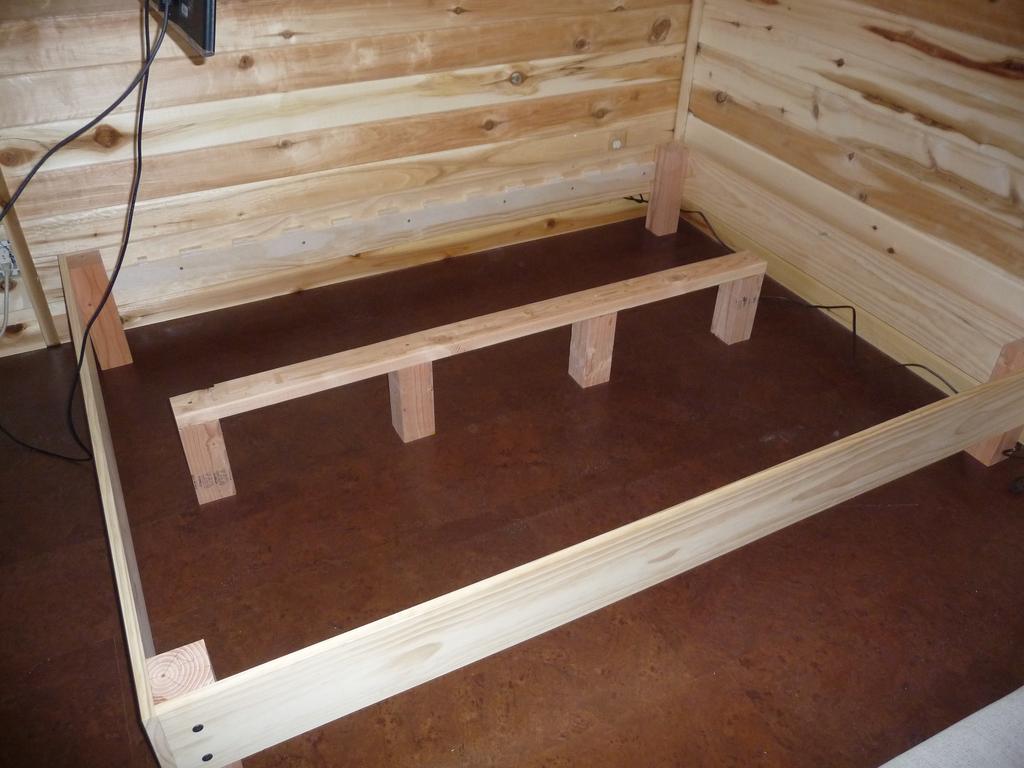
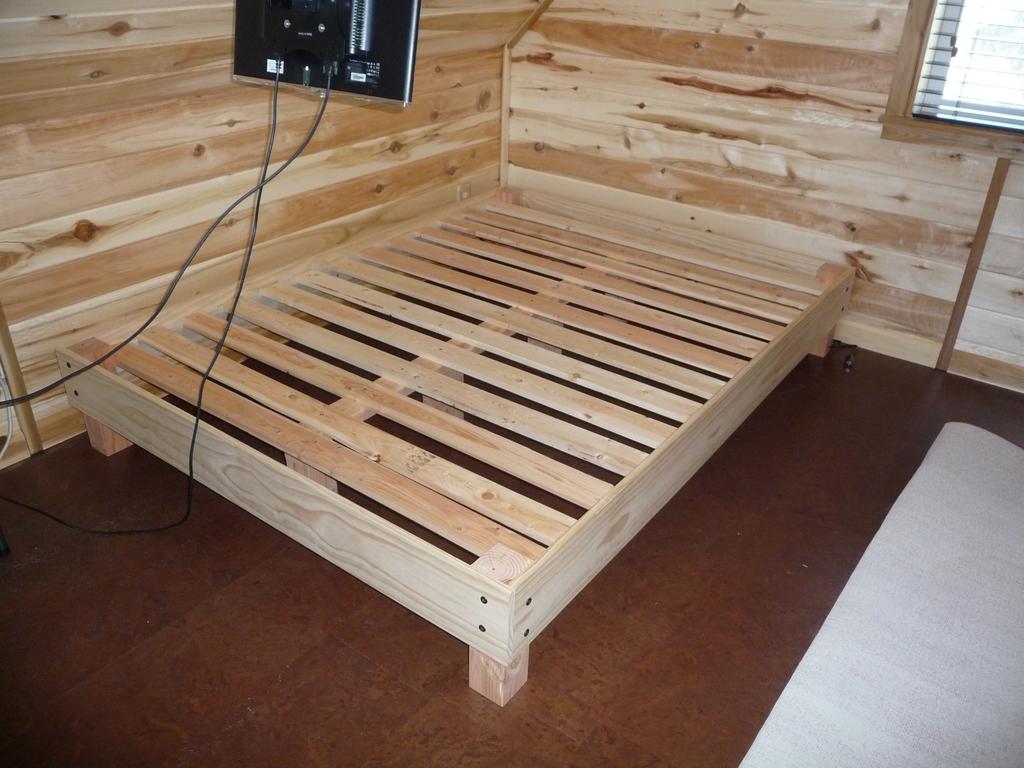
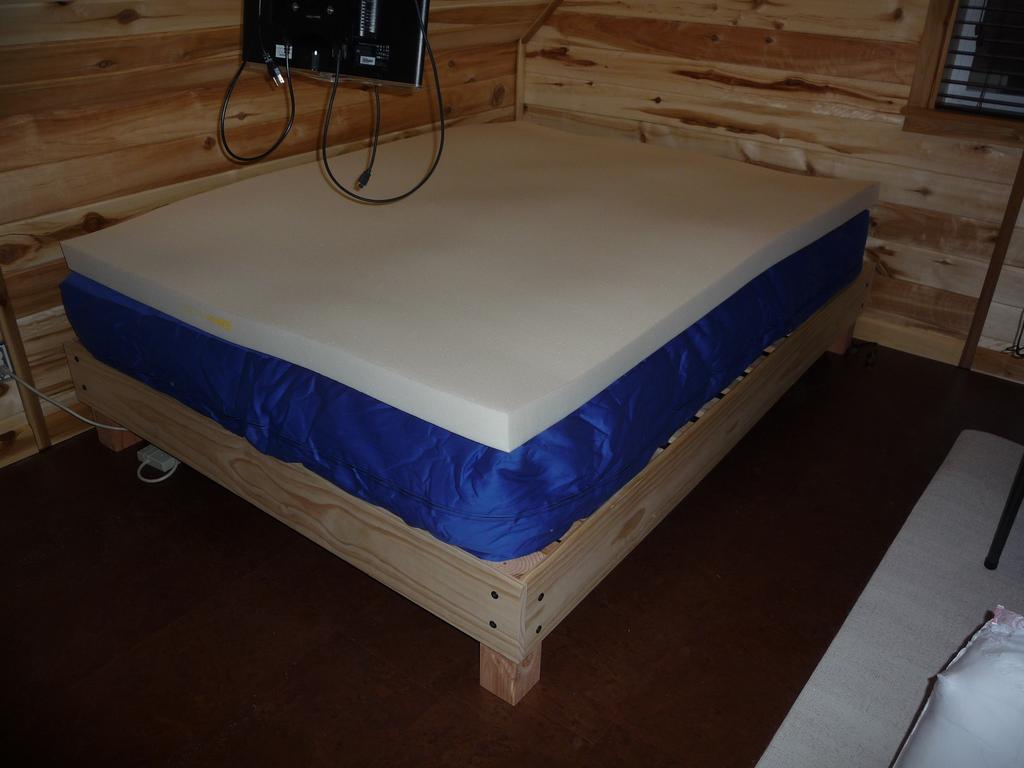
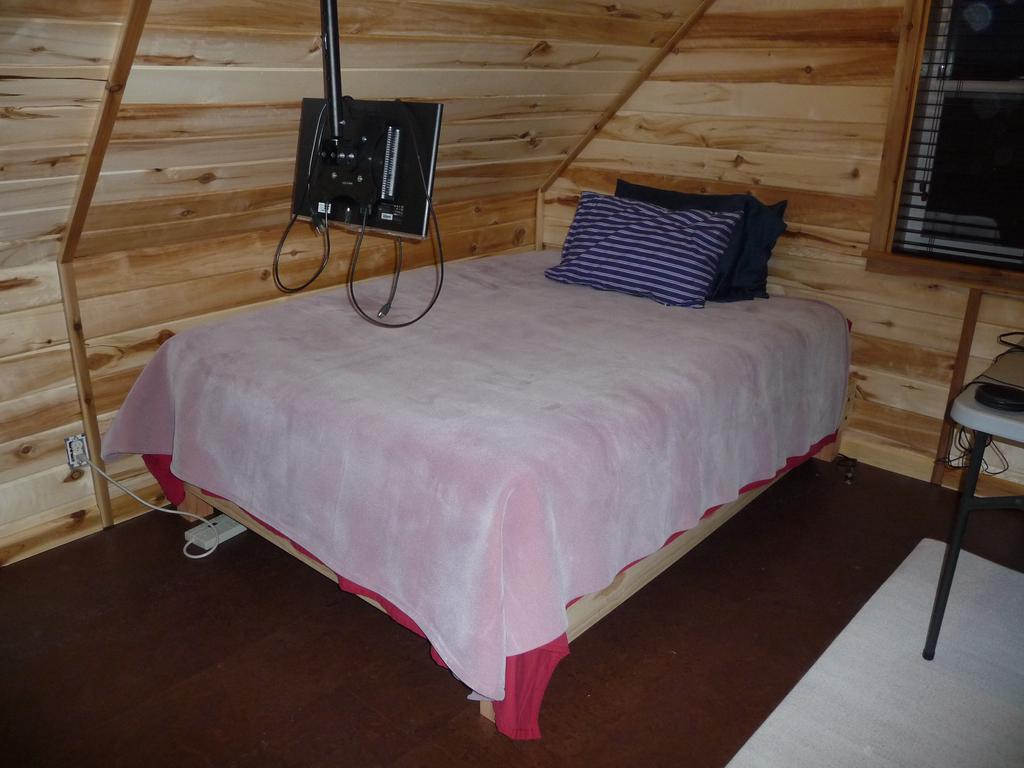
Last week I installed a new queen sized bed consisting of a basic frame I built, a futon mattress, and a memory foam topper. Much better than the twin bed.
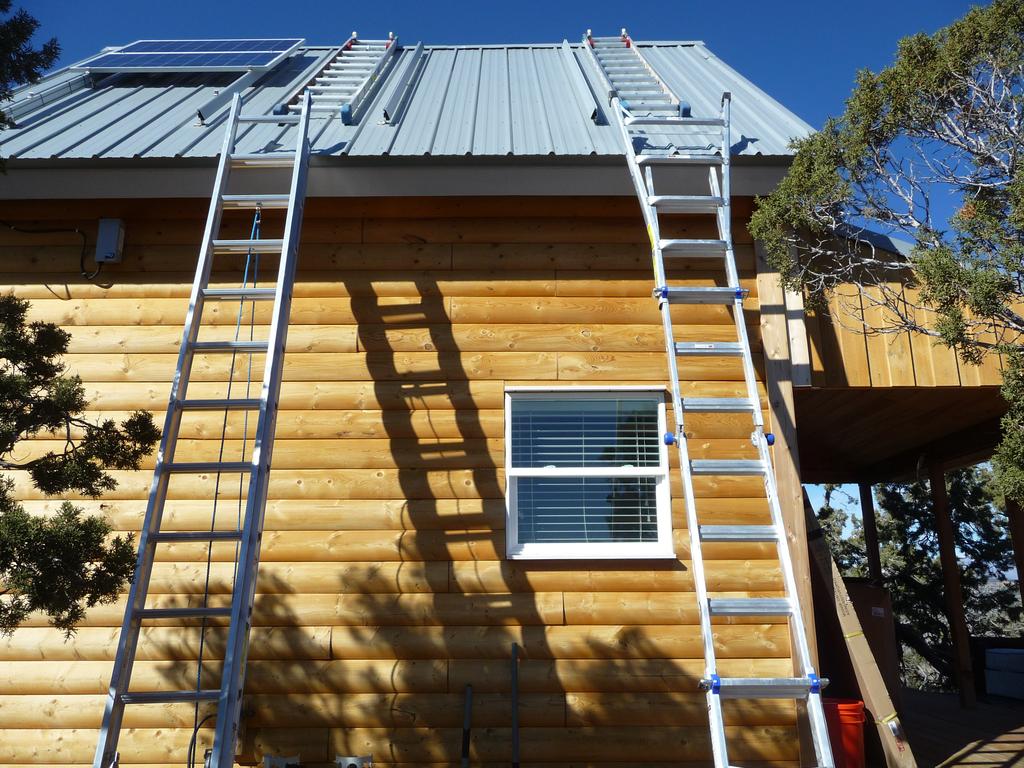
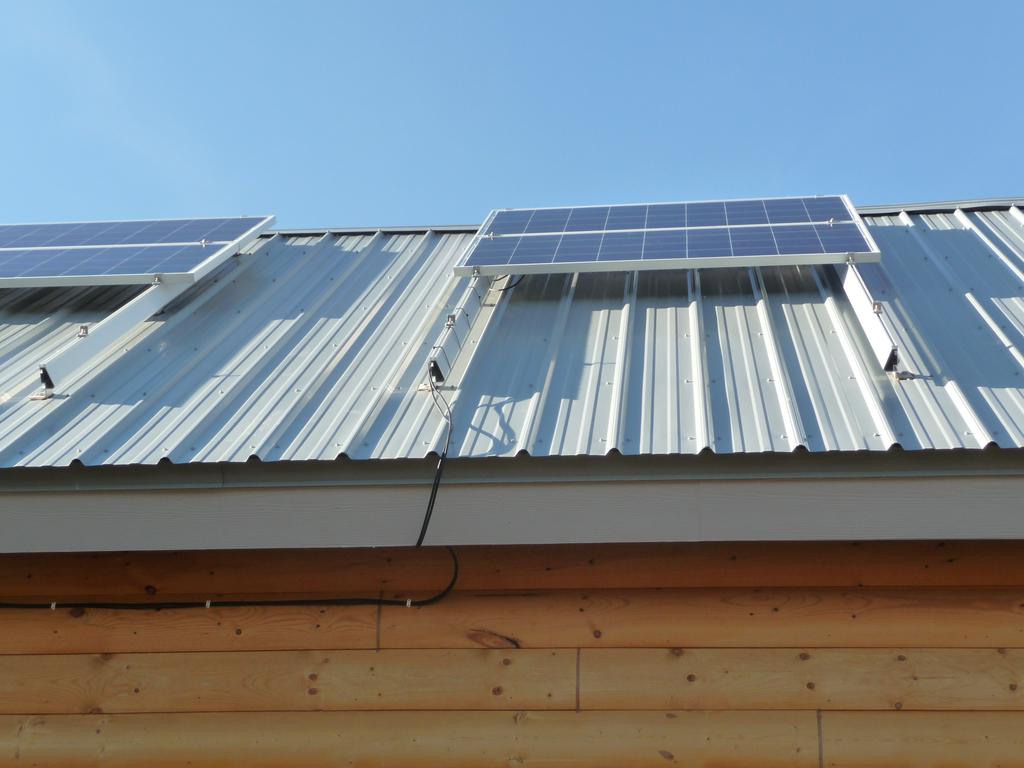
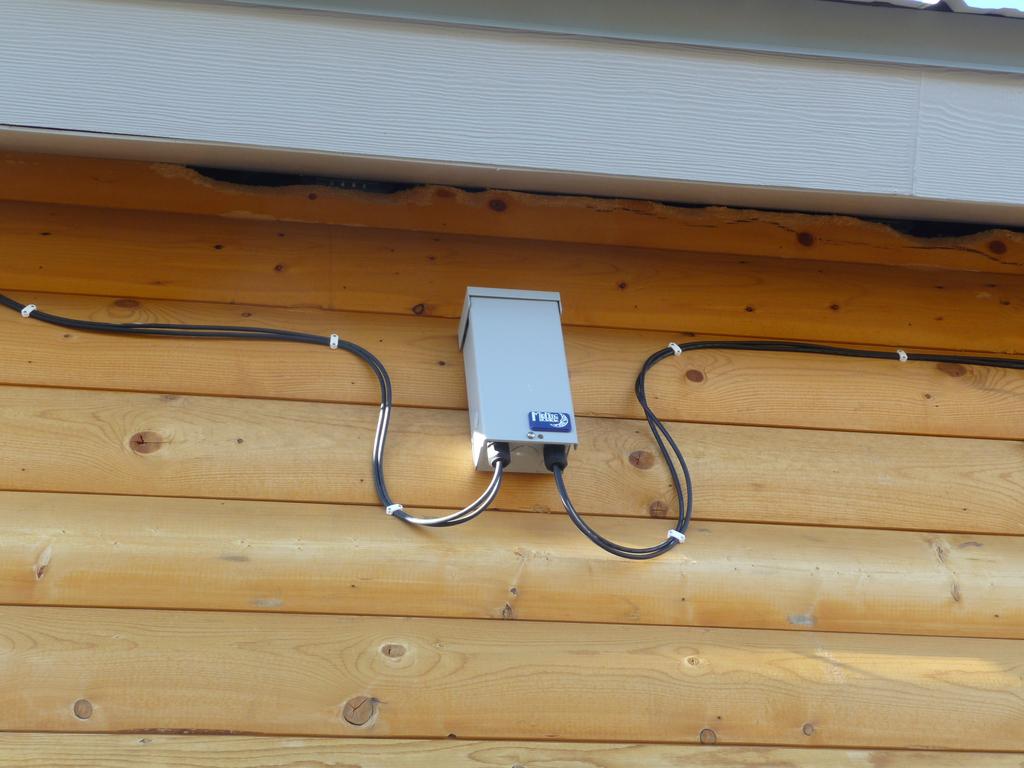
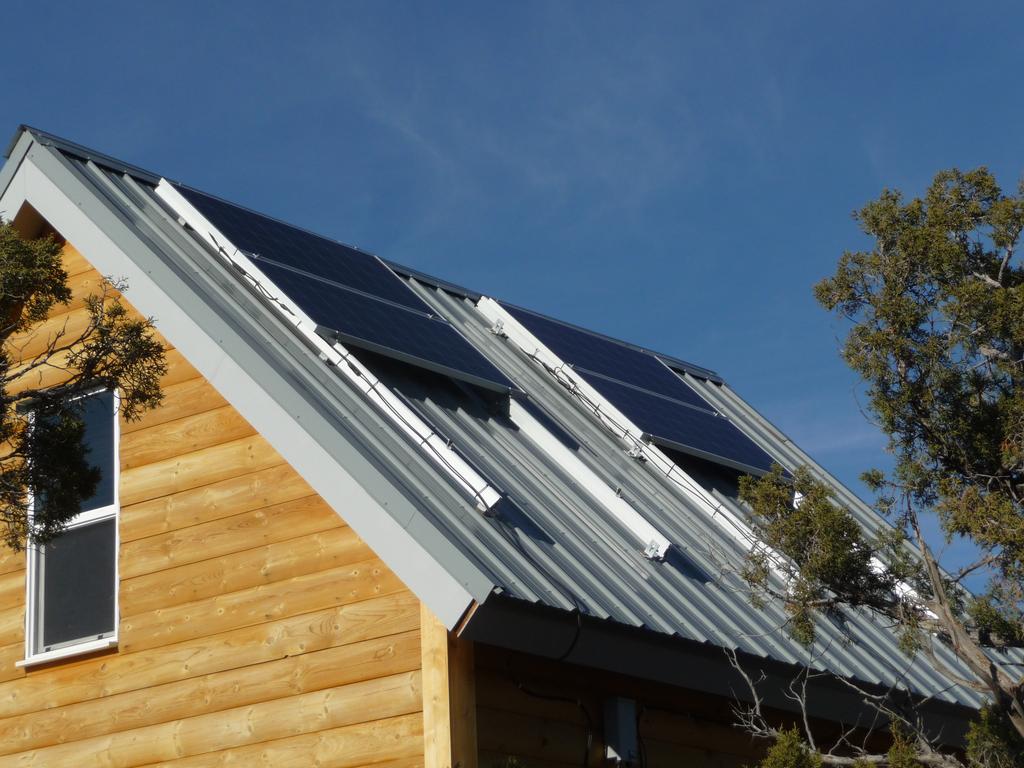
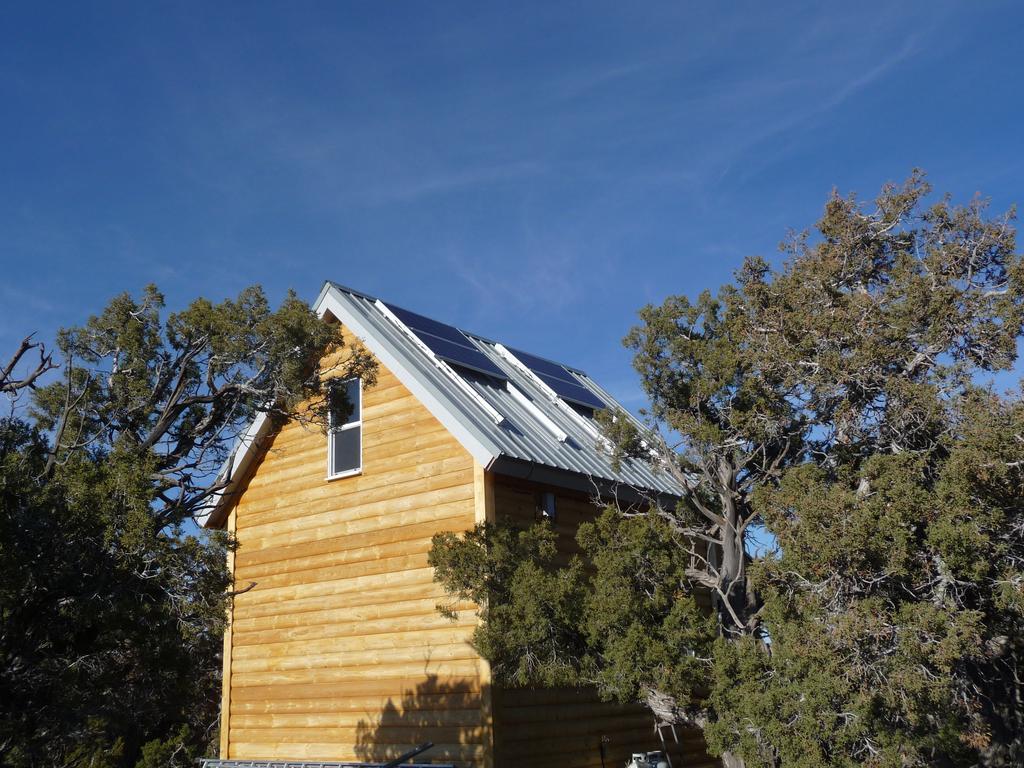
I also installed two more solar panels. I have a total of six panels, with four now installed.
A few questions, if you don't mind. Maybe you already covered it:
Are those 100lb propane tanks? How long will they last?
How much power can you consume using the battery/solar system?
With the foundation pier blocks, would there be a reason to dig down below the frost line and then pour the concrete? Or resting on the ground fine?
What do you do for a water source?
Where does your sewage and water waste drain to?
The four installed solar panels currently generate 580W. I have two more panels to install eventually for a total of 870W. The system is basically sized to provide power for at least three days with zero sun. My useage is fairly low though. The solar system provides power for a few CFL lights, two energy efficient ceiling fans, 12V water pump, a couple of efficient computers, and eventually a DC fridge.
As for the foundation piers, it really depends on your soil type and how well the area drains. My cabin is built on solid rock so I don't think frost heave will be an issue (and hasn't been so far). Anything else and I would have sunk the piers below frost depth.
Currently for water I just haul it in. Next summer I hope to install a rainwater collection system and eventually a well. There's a 200 gallon tank in the utility room to store the water. Water is probably my biggest issue and I don't have it all figured out yet but right now I'm generally only staying at the cabin for a few days at a time so hauling it in isn't that big of a deal.
I don't have any sewage, I use a sawdust, or "humanure", toilet and then compost the waste. Works great.
Greywater currently just gets dumped on the ground under the cabin because I haven't finished the drain system yet and I need to do some more research on using/disposing of greywater but ideally I'd like to recycle it for garden irrigation.
Hope I've answered your questions and thanks for the interest.
Thanks for the reply.
For the waste disposal, are you considering a septic tank?
What about a propane fridge instead of a DC fridge?
Do you use the bathroom and sink now? Do you use the water that you haul there for toilet, showers, etc?
How do you use the water pump and how does it work?
Why did you make the walls 11' feet, instead of 8' with 92 5/8" studs and then just build a 4' short wall to accommodate the loft? I ask not to criticize but because I am curious to learn new techniques or designs. I have only learned how to build over the last couple years.
What is the length and width of the cabin?
Thanks again. Your blog has given me a lot of ideas and inspiration for my own project.
The propane fridge is definitely an option and I did consider that but they're expensive and require regular maintenance. If I needed a full size fridge I'd probably go that route but I don't really need something that big so the DC chest type fridge will be cheaper and essentially free to run. I also considered a converted chest freezer (AC chest freezer converted to a fridge) which many people have done but although the freezer itself would only be a few hundred dollars, I'd have to buy a much larger (expensive) inverter to handle the compressor startup current.
I use the shower, bathroom sink, and kitchen sink with the water I haul in. The toilet doesn't use any water, just sawdust/peat moss. I currently haul in water in a 25 gallon tank but I'd like to get a bigger one. The 25 gallons lasts me about three days/nights but I try to keep a surplus in the big tank.
The water pump is a 12V Shurflo, typically used in RV's. It's 2.8 gpm and 45 psi. It's an on-demand pump so it kicks on automatically when a faucet or shower valve is opened. It's been working fine so far. Plenty of pressure in the shower. There are some pictures here: http://blog.flgator.com/2013-07-01-plumbing-2013....
Honestly, the 11' walls were used because the plans I was using as a guideline showed the framing done that way. FYI, it's called "balloon" framing vs. "platform" framing. But I think it mainly has to do with the ridge beam. Since I obviously couldn't use trusses due to the open loft, the roof is built with a ridge beam and rafters. There are basically two ways to do that. The first is to use a structural ridge beam which is a heavy duty beam that is supported by posts on both ends all the way to the foundation. In this case, the roof is "hung" from the ridge beam and all the load is supported by the beam. The second method is to use a non-structural "ridge board" which is a board that runs along the ridge and serves only as a place to tie the rafters together and doesn't support any load. In this case, all the load is supported by the walls. My roof is 12/12 (45 deg.) so roughly half of the roof load is vertical, pushing down on the walls, but the rest is lateral, pushing the walls apart. To keep the walls from being pushed apart, you need something to tie them together. Typically this is done with rafter ties, but that's not an option due to the loft. So in my case, the loft floor framing actually serves to tie the walls together. If it was platform framed and the loft walls were "kneewalls", there would be nothing to keep them from spreading apart from the lateral loads of the roof. Make sense? So if you platform frame, you need either a structural ridge beam, trusses, or rafter ties. With the loft as designed, the only one of those options that would work is the structural ridge beam and I can't even imagine how I would have gotten that installed.
The cabin is 16'x14' on the outside.
The plans I used as a guide were purchased here: http://www.countryplans.com/
That site also has a forum which is full great info about building small cabins.
I am in South Dakota and have thought about a rain collection system, but it would freeze solid and explode whatever I was trying to store it in.
As for freezing, in UT it doesn't usually get super cold for days on end and the mass of 200 gallons of water will take a long time to freeze in a well insulated tank. An outdoor tank has to be opaque anyway to prevent algae growth so a black tank that gets good sunlight during the day should retain enough heat to keep it from freezing during the night. I can always build some type of solar collector to focus more sunlight on the tank. Some people do that for stock tanks and it seems to work well. I have a normal barrel sized rain barrel at the mini-cabin and the water does freeze, but mostly just the top layer. It's not even insulated and it hasn't exploded or sprung any leaks.
But it's a good question. I think I'm probably just going to have to try it out and see if it's an issue. Looks like it's a bit colder in South Dakota but not outrageously so.
I have spoke with people in the area about rain collection and South Dakota doens't seem to have any laws about rain collection. But a lot of people have said that any rain collection system would freeze solid, if it was above ground. It gets below zero for weeks at a time here. i am not sure what kind of heating system I would need. Something I should look into though. I wonder if the solar collection system like you mentioned would work for me. I should try something this winter as an experiment.
I have a cistern under the house, which never freezes. It has to be 100 years old and just a rock cement cistern.
Ultimately, I think a cabin project for me is several years away, it if ever happens. A lot more research will have to take place first too.
Thanks again